

A Vancouver-based robotics company is preparing for rapid expansion after securing $8 million in Series A funding to deploy self-driving mobility pods in airports across North America and Europe.
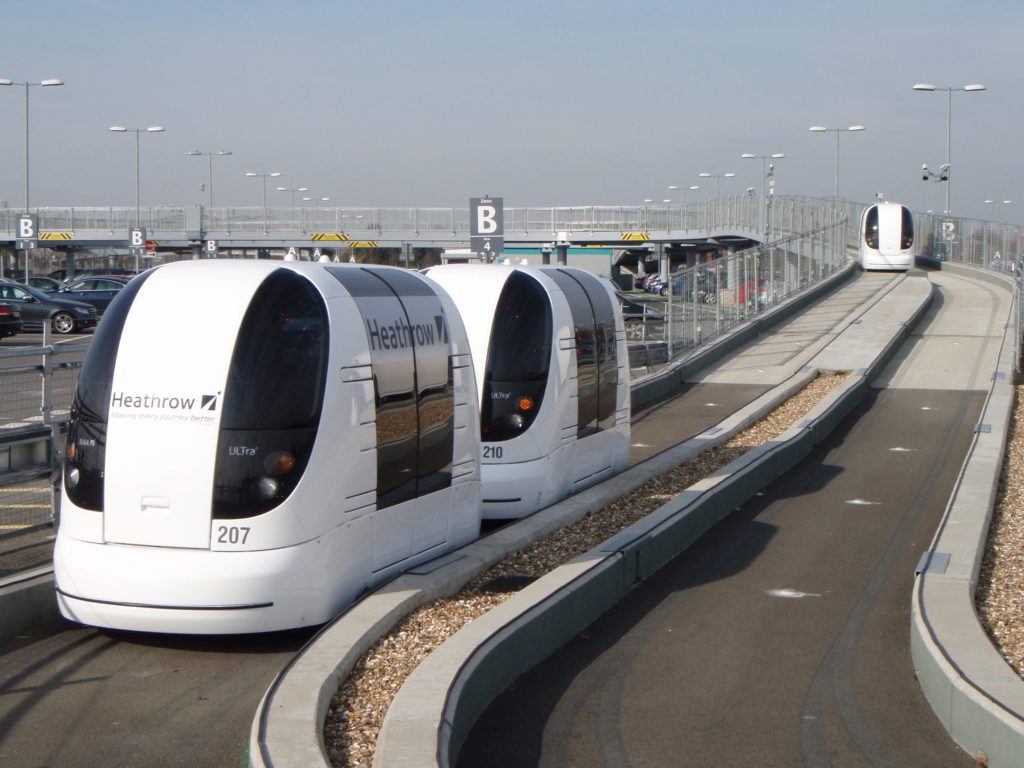
A&K Robotics has developed Cruz, a compact autonomous vehicle designed to transport passengers through crowded airport terminals and other complex indoor spaces. The technology addresses a growing gap between demand for mobility assistance and the capacity of traditional employee-operated cart services—a challenge that intensifies as populations age worldwide.
Solving the Crowded Airport Challenge
Co-founder and CEO Matthew Anderson explained the company's strategic focus: "If you can solve mobility in a crowded airport, you can solve it almost anywhere." Cruz is already operational at Vancouver International Airport and Madrid-Barajas Airport, providing real-world validation of the technology.
The autonomous pod uses advanced sensory systems—including cameras, sonar, and LiDAR—combined with the company's proprietary Kinesos AI platform. Rather than treating crowds as obstacles to avoid, the technology is specifically engineered to understand and flow with human movement patterns.
"The hard part isn't navigation—it's crowds," Anderson noted. "We've built a crowd-centered AI that reads the environment, predicts movement, and goes with the flow instead of fighting it. Most robots struggle in crowds—we designed ours specifically for them."
Scaling from Pilots to Permanent Deployment
The Series A round, which closed in late December, was co-led by BDC Capital's Industrial Innovation Venture Fund and New York-based Vantage Futures, the corporate venture capital arm of Vantage Group. Additional investors included Toronto's RiSC Capital, Silicon Valley's Grep VC, Vancouver's Nimbus Synergies, and serial entrepreneur Dan Gelbart.
A&K intends to use the capital to transition from pilot programs to permanent airport installations, expand manufacturing capacity from dozens to hundreds of vehicles monthly, and establish a new production hub in Surrey, BC. This funding brings the company's total capital raised to $10.6 million since its 2015 founding.
Anderson stated the company is positioning itself as "the infrastructure layer for movement in complex indoor spaces," with ambitions extending beyond airports to cities, transit systems, and everyday environments where independent mobility matters.
"We want to make mobility seamless everywhere—so people can move independently wherever they are," he said.
This article is based on reporting from BetaKit. Read the original story.