


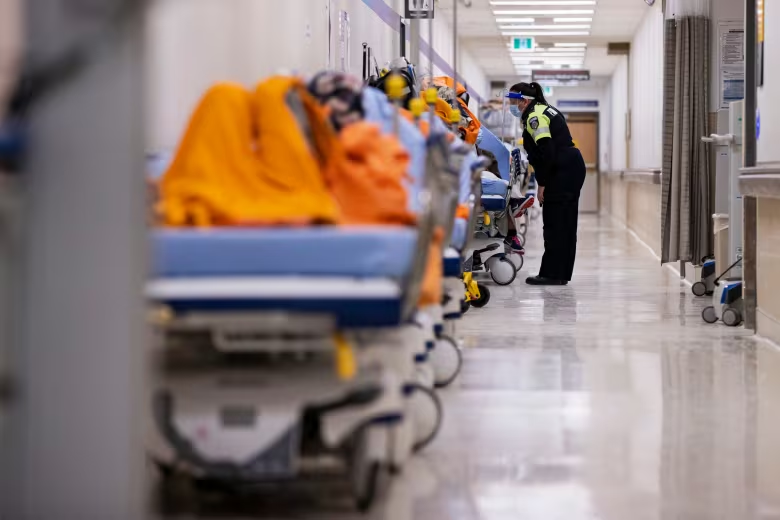
An Ontario coroner's jury has concluded that the 2021 death of 24-year-old Heather Winterstein was accidental, stemming from septic shock caused by delayed medical treatment following a bacterial infection. The finding, released Wednesday after a virtual inquest that began March 30, has reignited urgent conversations about systemic barriers facing Indigenous people in Canadian emergency departments.
Winterstein collapsed in the emergency room at what is now called Marotta Family Hospital in St. Catharines on December 10, 2021, after visiting the facility twice in two consecutive days seeking care for body pain following a fall. She died within hours despite medical staff's efforts to save her life.
Family Calls for Systemic Change
While the jury stopped short of the homicide finding Winterstein's family had sought, they ruled that non-natural causes—specifically delayed treatment—contributed to her death. Her family interpreted this finding as validation of their central argument: that anti-Indigenous bias and discrimination played a direct role in the outcome.
"Heather went to the hospital for help and was turned away. The system must change — for people like Heather and for Indigenous people across Canada. That will be Heather's legacy," said Francine Shimizu-Orgar, Winterstein's mother, in a statement to CBC.
Winterstein's father, Mark Winterstein, called 911 to request emergency assistance before his daughter's death. He told the inquest that he was encouraged by the jury's 68 recommendations and called on Niagara Health and regional paramedic services to implement them immediately.
"If this inquest spares even one family the loss we have suffered, it will have been worth it," he said.
68 Recommendations Target Healthcare Disparities
The jury's recommendations focus heavily on systemic improvements in how Indigenous patients are treated within hospital emergency departments and paramedic services. The findings underscore persistent gaps in culturally competent care and highlight the consequences of stereotyping and dismissal of Indigenous patients' medical concerns.
Presiding officer Dr. David Eden acknowledged the emotional weight of the evidence presented throughout the inquest. "She was a young Indigenous woman, daughter, sister, friend," he said of Winterstein. "While waiting for care in the emergency room for the second time in two days, she collapsed and died within hours."
Eden praised the jury's thoroughness, noting that testimony "was at times hard to watch and at times was technically complex," and commended Winterstein's family for their active participation throughout the process.
Broader Questions About Emergency Care Access
The inquest raised critical questions about triage protocols, patient assessment standards, and how unconscious bias—whether explicit or systemic—can delay life-saving interventions. Both Niagara Health and Niagara's paramedic service had disagreed with the family's homicide argument, yet the jury's recommendations signal recognition that the healthcare system failed to meet Winterstein's needs.
The case adds to growing evidence of healthcare disparities affecting Indigenous Canadians. Research and inquests across the country have documented patterns where Indigenous patients experience longer wait times, receive less aggressive treatment, and face stereotyping related to substance use and socioeconomic status.
What Comes Next
Under Ontario law, a coroner's jury cannot assign legal responsibility or lay blame, but their recommendations carry significant weight in healthcare policy discussions. Whether Niagara Health and regional services will implement the 68 recommendations—and how quickly—remains to be seen.
Winterstein's case underscores the urgent need for systemic change in how Canada's healthcare system serves Indigenous communities. Her family's determination to bring her story to light may yet prevent similar tragedies.
This article is based on reporting by CBC Health's David Chen. Read the full CBC News investigation at CBC.ca.