


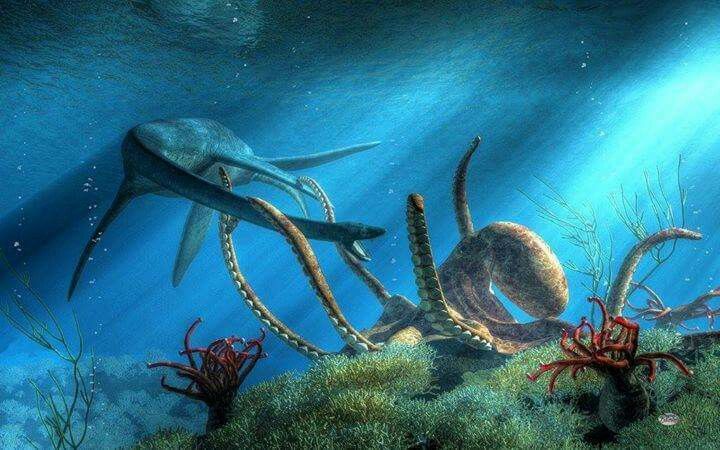
Imagine a creature the size of a modern whale, armed with powerful tentacles and a crushing beak capable of cracking through shells and bone. That's no fantasy — it's what researchers have discovered lurking in ancient seas that once surrounded British Columbia.
New fossil evidence published in the journal Science suggests that massive octopuses prowled the oceans during the Age of Dinosaurs, making them among the largest invertebrates ever to have existed on Earth. The findings challenge everything scientists thought they knew about prehistoric marine ecosystems.
Giants From the Deep Past
The fossils come from two newly identified species, with one — Nanaimotethis haggarti — reaching lengths of up to 19 metres, roughly the size of a sei whale. To put that in perspective, that's nearly three times larger than the modern giant squid, which holds the current record at around 12 metres.
"This creature was terrifyingly large, even accounting for a wide margin of error," said Cameron Tsujita, a paleontology professor at Western University in London, Ontario, who was not involved in the study but reviewed the findings.
The fossils themselves are remarkable — they consist primarily of the creatures' beaks or jaws, discovered in rock formations on Vancouver Island around the Nanaimo Group deposit and in Hokkaido, Japan. Some specimens are housed at the Courtenay and District Museum and Paleontological Centre.
Ancient Hunters With Intelligence
What makes this discovery particularly intriguing is evidence that these prehistoric octopuses weren't just big — they were sophisticated hunters. Wear patterns on their fossilized beaks reveal they may have been "handed," meaning they showed a preference for grabbing prey from one side, a trait associated with intelligence.
"Nanaimotethis likely used its large body and long arms to capture prey and its powerful jaws to crush hard structures such as shells and bones," researchers noted in their analysis.
During the Late Cretaceous period, massive marine reptiles like mosasaurs and elasmosaurs were thought to dominate ocean predation. This discovery adds a new player to the mix — a giant invertebrate sitting at the top of the food chain alongside (or competing with) these renowned monsters.
A Rare Fossil Find
Finding octopus fossils is extraordinarily rare. Octopuses are soft-bodied creatures, and fossilization typically requires hard materials like bones and shells to survive the ages. The preservation of these specimens makes them exceptionally valuable to paleontologists.
Jim Haggart, a researcher at the Geological Survey of Canada, helped piece together the story. The B.C. fossils were initially discovered by amateur paleontologists approximately 20 years ago. When researchers fully studied them years later, they named the larger species after Haggart in recognition of his groundbreaking work describing other Cretaceous marine species from Western Canada.
"It was an honour then, and it is an even bigger honour now," Haggart told media outlets Thursday, "that the fossil has been linked to such gigantic life forms."
Modern octopuses are renowned for their intelligence and problem-solving abilities. These prehistoric giants, it appears, carried that same sophisticated intelligence — only wrapped in bodies the size of whales and equipped with the power to crush bone.
This article is based on reporting from CBC Tech and research published in the journal Science.