


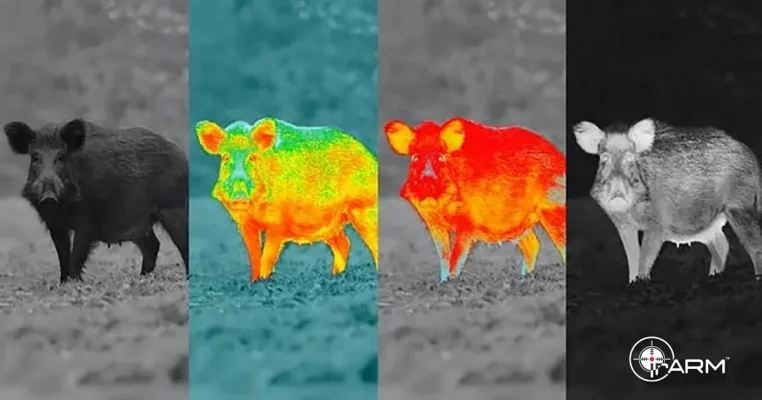
Alberta researchers are deploying cutting-edge drone technology armed with thermal cameras and artificial intelligence to tackle one of the province's most pressing agricultural and environmental challenges: invasive wild boar.
A groundbreaking collaboration between Alberta Agriculture and the University of Calgary has produced promising results in what officials are calling the Wild Boar at Large Detection Project. The initiative represents a significant leap forward in the battle against these highly destructive animals that have become an escalating problem across Alberta's farmland.
A New High-Tech Arsenal
Traditional methods of tracking wild boar — ground surveys, helicopter patrols, and trail cameras — have consistently fallen short. These elusive nocturnal creatures are remarkably intelligent and vanish into heavy cover at the first sign of human activity, making conventional detection nearly impossible.
"When pigs see any sign of human activity, they get into heavy, heavy cover and just disappear," explained Ryan Brook, a University of Saskatchewan professor leading the Canadian Wild Pig Research Project. "Being able to look down from the air is just invaluable."
The new approach uses automated drones equipped with infrared cameras that detect heat signatures from boar bodies. The technology works particularly well at night, when the thermal contrast between warm animals and cold surroundings creates crystal-clear images.
AI Powers the Analysis
Here's where artificial intelligence enters the equation. Researchers trained sophisticated AI programs to analyze thermal footage in real time, automatically identifying wild boar and counting individuals with remarkable accuracy. This automation dramatically accelerates fieldwork and provides wildlife managers with actionable data they simply couldn't gather before.
"It really helps with maximizing efficiency in terms of field work, but also gives us just a different tool to monitor a species that is difficult to monitor," said Hannah McKenzie, Alberta's government wild boar specialist who helped lead the research effort.
The pilot project deployed thermal drones across Alberta in spring 2024, and the results have exceeded expectations. As the technology improves and cameras become more sophisticated, researchers expect detection capabilities to improve significantly.
Understanding the Enemy
Alberta's feral pig population includes Eurasian wild boar as well as hybrids — often called "super pigs" — that resulted from breeding between escaped farm animals and their descendants. These adaptable omnivores typically weigh between 55 and 115 kilograms and pose a serious threat to crops, native vegetation, and wildlife habitat.
What makes super pigs particularly alarming is their breeding capacity. Sows can produce two litters every 12 to 15 months, allowing populations to explode rapidly. The animals typically travel in family groups known as sounders, which the drone technology can now track across vast landscapes without triggering the defensive hiding behaviour traditional detection methods provoke.
"As the cameras get better, the technology improves, we're just going to see better capacity to find these pigs … and that's a huge part of the battle," Brook said.
The thermal drone initiative has already shown promise in other parts of Canada and the United States, but Alberta's systematic deployment and AI integration represent a significant step forward in wildlife management innovation.
According to a report published in late March on the Alberta government website, automated drones equipped with infrared cameras offer an "innovative and non-invasive" alternative to traditional detection methods — a critical advantage when dealing with animals as wary and destructive as wild boar.
This story is based on reporting from CBC Edmonton. For the full original report, visit CBC News Edmonton.