


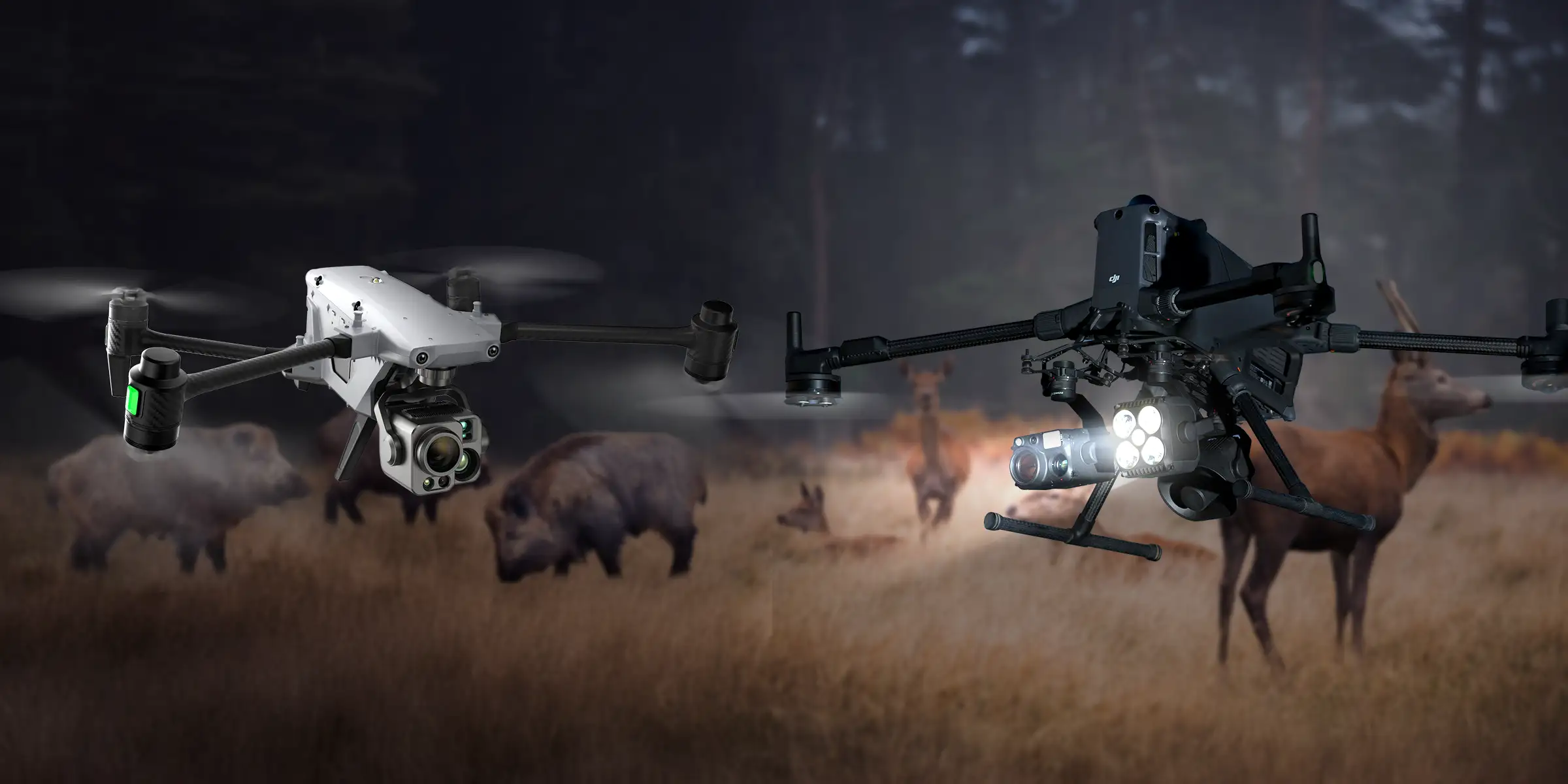
Alberta is deploying cutting-edge drone technology equipped with thermal cameras and artificial intelligence in an ambitious new offensive against the province's exploding wild boar population—a development that could reshape how the region tackles one of its most persistent agricultural and ecological threats.
The Wild Boar at Large Detection Project, a collaborative effort between Alberta Agriculture and the University of Calgary, represents a significant shift in how authorities are approaching an animal control crisis that has frustrated farmers and environmental officials for years.
Why Traditional Methods Are Failing
Wild boar are notoriously difficult to track using conventional methods. These intelligent, nocturnal animals possess an uncanny ability to sense human activity and vanish into dense cover before traditional detection teams can respond. Ground tracking, helicopter surveys, and even remote trail cameras have proven largely ineffective against an animal that seems perpetually one step ahead of humans.
"When pigs see any sign of human activity, they get into heavy, heavy cover and just disappear," explained Ryan Brook, a University of Saskatchewan professor leading the Canadian Wild Pig Research Project. "Being able to look down from the air is just invaluable."
Thermal Technology Changes the Game
In spring 2024, researchers deployed specialized drones equipped with infrared cameras capable of detecting the heat signatures emitted by boar bodies. The technology works particularly well during nighttime hours, when the stark contrast between warm animal bodies and cold surroundings creates clear, identifiable thermal signatures on camera.
Hannah McKenzie, Alberta's government wild boar specialist, emphasized the practical advantages of this approach. "We're trying to bring a lot of different tools to bear on the problem," she said. "Drones are one of them. It really helps with maximizing efficiency in terms of field work, but also gives us just a different tool to monitor a species that is difficult to monitor."
What makes the project truly innovative is the artificial intelligence component. Researchers trained AI programs to analyze the thermal footage in real time, automatically identifying wild boar and counting how many animals are present in a given area. This automation dramatically reduces the workload while increasing accuracy and speed.
The Scope of Alberta's Feral Pig Crisis
Alberta's wild boar population includes both pure Eurasian wild boar and hybrids resulting from escaped or abandoned domestic farm pigs. These so-called "super pigs" are causing unprecedented damage across the province and beyond.
The animals are relentless omnivores weighing between 55 and 115 kilograms—roughly 120 to 250 pounds each. They are also prolific breeders: female sows can produce two full litters every 12 to 15 months, meaning populations can double rapidly if left unchecked. They typically travel in family groups called "sounders," which can devastate crops, pastureland, and native ecosystems in their path.
According to the research report published in late March on the Alberta government website, thermal drones provide an "innovative and non-invasive" alternative that allows researchers to monitor these roaming families across vast landscapes without disturbing them or pushing them further into hiding.
A Proven Approach with National Promise
The technology isn't entirely new—thermal drones have already shown promise in combating wild boar infestations in other parts of Canada and the United States. As camera technology continues to improve and AI systems become more sophisticated, researchers expect detection capabilities will only strengthen.
"As the cameras get better, the technology improves, we're just going to see better capacity to find these pigs," Brook said. "And that's a huge part of the battle."
For Alberta farmers and rural communities already grappling with significant crop and property damage, the deployment of this advanced surveillance system represents a tangible step forward in a conflict that has felt increasingly one-sided.
This article was originally reported by CBC Calgary.