


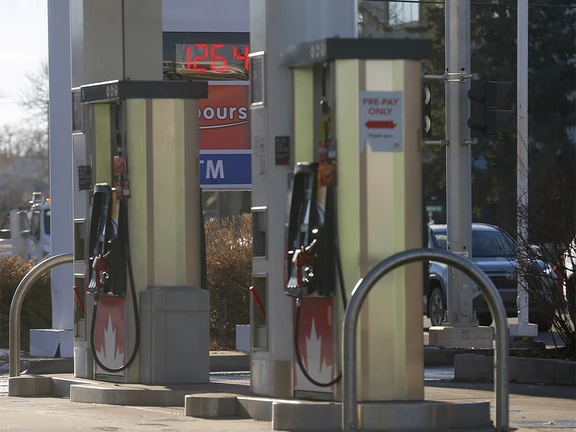
Albertans and Canadians across the country are facing a painful reality at the pump as global fuel prices surge to levels not seen in years, forcing difficult financial decisions for retirees, families, and working professionals alike.
The spike traces back to escalating tensions in the Middle East, where military conflict has disrupted one of the world's most critical oil shipping routes. The Strait of Hormuz, which handles roughly one-fifth of global oil supply, has become a flashpoint—and the economic fallout is being felt keenly in Calgary, Edmonton, and beyond.
For John Hollinrake, a 60-year-old Calgary resident living on a fixed retirement income, the math no longer adds up. Each trip to the pump now comes with an uncomfortable calculation: fill the tank or buy groceries?
"I can't afford to eat the food that I want to eat," Hollinrake said, watching the price ticker climb as he fuels his sedan at a local Calgary station.
Hollinrake drives a friend 150 kilometres daily for work—a commitment that's becoming increasingly unaffordable. Like thousands of Albertans, he's quietly redirecting money from his food budget to keep his vehicle running. It's a choice many seniors and fixed-income earners never expected to face.
The surge affects more than just personal vehicles. Diesel prices are climbing, jet fuel is soaring, and the ripple effects are already visible across Canada's transportation, agriculture, and retail sectors.
What's Driving the Price Spike?
Global oil markets have responded sharply to geopolitical instability, with traders factoring in potential supply disruptions. Even if current tensions ease, analysts warn that elevated fuel prices may persist for months—or potentially years—as markets adjust to the new reality.
For those tracking fuel costs and comparing prices across Alberta, resources like Calgary Prices offer real-time fuel price comparisons to help shoppers find the most affordable stations in their area.
Could Higher Prices Actually Be Good?
Some economists are offering a counterintuitive perspective: if persistently high fuel costs encourage Canadians to reduce consumption and choose alternatives like public transit, carpooling, and remote work, it could yield unexpected benefits for the environment and urban planning.
Yet for working Albertans who depend on their vehicles and have limited options, this silver lining offers cold comfort. The immediate challenge remains survival on tighter household budgets, one tank at a time.
This article is based on reporting from the Calgary Herald.