


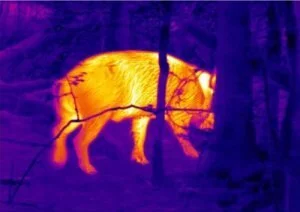
Alberta is fighting back against one of the Prairies' most destructive invasive species with a powerful combination of thermal imaging drones and artificial intelligence — and early results are turning heads across North America.
Researchers from Alberta Agriculture and the University of Calgary launched the Wild Boar at Large Detection Project this spring, testing automated drones equipped with infrared cameras to detect and track wild boar populations that have been wreaking havoc on farmland and natural ecosystems across the province.
"We're trying to bring a lot of different tools to bear on the problem," said Hannah McKenzie, Alberta's government wild boar specialist who helped lead the groundbreaking study. "Drones are one of them."
Why Traditional Methods Fall Short
Wild boar — particularly the so-called "super pigs," hybrids of Eurasian wild boar and escaped domestic pigs — are notoriously difficult to monitor. These intelligent animals are nocturnal, wary of human activity, and instinctively dive into heavy cover at the first sign of disturbance. Traditional tracking methods like ground surveys, helicopter patrols, and trail cameras have proven inadequate for managing populations that can devastate crops, damage native vegetation, and spread disease.
"When pigs see any sign of human activity, they get into heavy, heavy cover and just disappear," explained Ryan Brook, a University of Saskatchewan professor and lead researcher for the Canadian Wild Pig Research Project. "Being able to look down from the air is just invaluable."
How the Technology Works
The thermal drone system operates on a simple but ingenious principle: infrared cameras detect heat radiation from animal bodies, which stands out dramatically against the cooler landscape at night. Researchers deployed the technology during spring 2024, and artificial intelligence programs were trained to analyze the footage automatically — identifying wild boar with remarkable accuracy and counting populations without human interference that might spook the animals.
"It really helps with maximizing efficiency in terms of field work, but also gives us just a different tool to monitor a species that is difficult to monitor," McKenzie noted.
A Game-Changer for Prairie Conservation
The combination of improving camera technology and AI capability offers unprecedented insight into how wild boar move across Alberta's landscape. These destructive animals — typically weighing between 55 and 115 kilograms — travel in family groups called sounders. Thermal drones provide a bird's-eye view of these roaming populations across vast territories without pushing them into hiding.
The threat is serious. Feral pigs are classified as pest species, and the hybrid populations breeding in Alberta are incredibly prolific, with sows capable of producing two litters every 12 to 15 months. Their omnivorous diet and adaptability make them threats to both agriculture and native ecosystems.
"As the cameras get better, the technology improves, we're just going to see better capacity to find these pigs … and that's a huge part of the battle," Brook said.
Similar thermal drone programs have already shown promise battling wild boar infestations in other parts of Canada and the United States, suggesting Alberta's approach is part of a continent-wide shift toward high-tech wildlife management.
The Alberta government's Wild Boar at Large Detection Project report was published in late March, documenting the collaboration as part of the province's broader strategy to defend its agricultural and natural resources from this persistent invasive threat.
This article is based on reporting from CBC Tech. Read the original coverage at CBC News.