


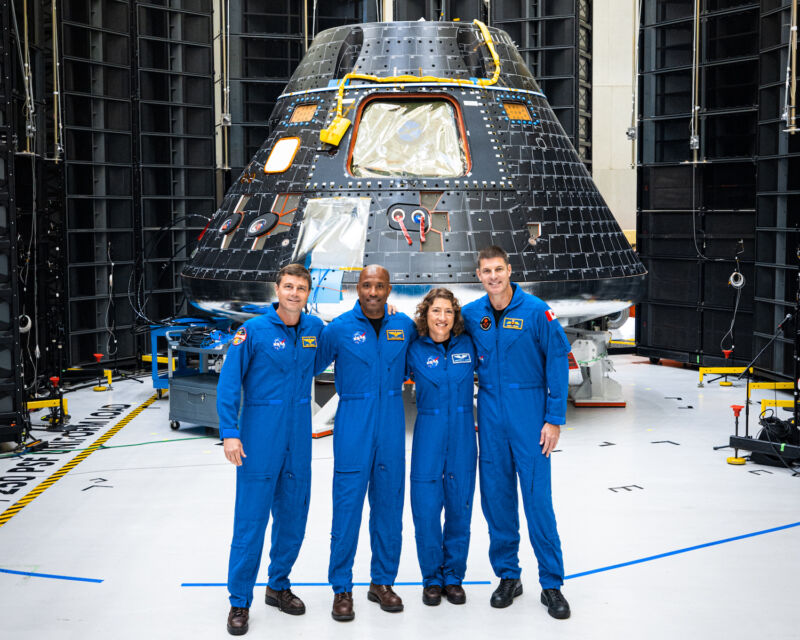
Canadian Space Agency astronaut Jeremy Hansen and three NASA colleagues have safely returned from a groundbreaking lunar flyby mission that set new records and revealed unexpected engineering challenges that could reshape humanity's next steps in space exploration.
The four-member crew—Hansen alongside NASA astronauts Reid Wiseman, Victor Glover, and Christina Koch—completed their 10-day mission after traveling farther than any humans in history. The team reached a maximum distance of 406,771 kilometres from Earth, surpassing the Apollo 13 record set more than 50 years ago.
Record-Breaking Distance, Real-World Problems
While images and mission updates painted a picture of smooth sailing and groundbreaking achievement, the crew was simultaneously grappling with unexpected technical failures that exposed vulnerabilities in spacecraft design.
"This was a test mission," NASA emphasized. "Artemis II was the first time astronauts actually tested the Orion spacecraft and its capabilities in the demanding environment of deep space."
The Space Toilet Crisis Nobody Expected
Within an hour of launch, astronaut Christina Koch reported a critical malfunction: the Universal Waste Management System—the spacecraft's toilet—had failed. What sounds mundane became a genuine operational challenge in the zero-gravity environment.
"I'm proud to call myself the space plumber," Koch later told media with characteristic humour. "I like to say that it is probably the most important piece of equipment on board."
After several hours of troubleshooting and essentially rebooting the system, Koch restored basic function. But problems persisted. The lines designed to vent urine into space began freezing in the vacuum, forcing the crew to rely on backup systems for much of the mission.
For NASA, this isn't a minor annoyance—it's a red flag. Future missions to Mars could last months. If the waste management system can't handle a 10-day flight, deeper exploration becomes dangerously complicated.
A Moment of Profound Remembrance
Beyond engineering challenges, Artemis II delivered an unexpectedly moving tribute. During a transmission to mission control, Hansen announced that the crew wanted to name lunar craters in honour of their journey.
They named the first "Integrity," after their Orion capsule. But the second announcement carried emotional weight: a crater named "Carroll"—honouring the memory of Wiseman's wife, who died of cancer in 2020.
The gesture underscored how these missions remain fundamentally human, even as they push the boundaries of technological achievement.
This article is based on reporting from CBC Tech and NASA mission updates. For the original reporting, visit CBC News.