


Canada's housing crisis won't be solved by interest rate decisions alone, according to top officials at the Bank of Canada—a statement that carries major implications for Canadians struggling with affordability in Calgary, Alberta, and across the country.
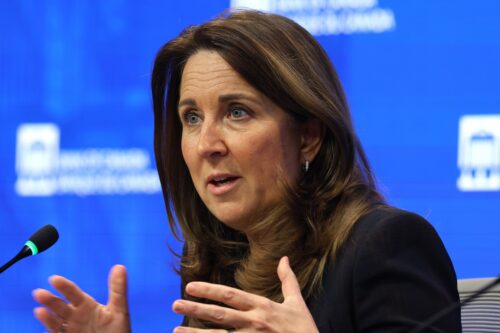
Carolyn Rogers, the Bank of Canada's Senior Deputy Governor, made the remarks clear during a speech in Victoria, British Columbia: the central bank cannot—and should not—use interest rates as a weapon against rising home prices.
"Targeting house prices directly with interest rates would ask monetary policy to do more than it can reasonably do—and would risk imposing costs across the broader economy," Rogers said in prepared remarks.
The statement underscores a critical reality facing policymakers: interest rates are a blunt instrument. While borrowing costs do influence how much Canadians are willing to spend on housing, they cannot address the fundamental problem plaguing the market—a severe shortage of available homes.
What Actually Works? Supply and Stable Prices
Rogers emphasized that lasting solutions require a different approach altogether. Rather than asking the Bank of Canada to manage housing demand through rate adjustments, the real solution involves increasing the supply of homes and controlling inflation.
"Low, stable and predictable inflation" is the best medicine for affordability problems, Rogers argued. She also stressed that permitting restrictions and limited construction capacity are the true barriers keeping homes out of reach for Canadian families.
"The goal has to be a policy mix that increases supply, protects resilience and reduces the economy's dependence on rising house prices," Rogers stated.
Housing Market Remains Weak Despite Price Declines
The housing market has already cooled significantly from pandemic peaks. Home sales totalled just 37,738 units in August on a seasonally adjusted basis—well below historical averages. Prices have fallen approximately 20 per cent since their pandemic peak, when the central bank cut rates to emergency levels of 0.25 per cent.
Yet affordability remains deeply strained. Higher borrowing costs and stretched household finances continue to keep potential buyers sidelined, leaving the market vulnerable despite the price correction.
Rate Decisions Focused on Inflation, Not Housing
The Bank of Canada's next rate decision comes on October 28, 2026. Markets are currently pricing in approximately 100 basis points of rate increases over the coming year, though the immediate outlook remains uncertain with traders assigning roughly 40 per cent odds to a hike at the October meeting.
The current policy rate stands at 2.25 per cent. While some analysts argue that lower rates could stimulate housing demand, Rogers and her colleagues appear committed to tackling inflation first—even if that means keeping borrowing costs elevated in the near term.
For Calgary and Alberta residents, this signals that relief at the mortgage counter may not come quickly, and that solutions to housing affordability will require provincial and municipal governments to tackle zoning, construction bottlenecks, and housing supply directly.
If you're researching home prices in Calgary or Alberta, CalgaryFinder.com provides comprehensive real estate data, neighbourhood guides, and current property listings to help you understand your local market. For those comparing costs of living across the region, Calgary Prices tracks housing costs and other economic indicators affecting Canadian families.
This article is based on reporting from Canadian Mortgage Trends and Bloomberg. For more analysis on mortgage trends and housing policy, visit Canadian Mortgage Trends.