


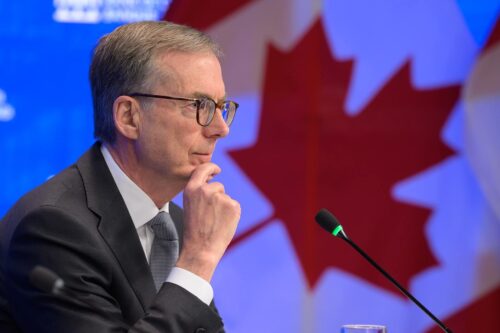
The Bank of Canada is signalling it won't be spooked into inaction by economic uncertainty. Despite global trade tensions and volatile energy markets, policymakers are prepared to keep raising interest rates if inflation doesn't cool down—a message that will hit Canadian borrowers' bottom lines.
Central bank Governor Tiff Macklem and his governing council raised the policy rate to 2.5% last month, marking the first increase in over three years. In newly released meeting minutes, officials made clear that "there could be a need to increase the policy rate further," even as they acknowledge "considerable uncertainty" facing the economy.
Energy Shocks and the Inflation Threat
The bank's core concern is straightforward: higher oil prices tied to Middle East geopolitical tensions are expected to stay elevated, and that's pushing inflation higher across the board. Energy costs don't just affect gas pumps—they ripple through grocery stores, heating bills, and shipping costs that businesses pass along to consumers.
"The combination of higher energy prices and pass-through had increased the risk of persistent, broad-based inflation," the council noted in their deliberations. Policymakers estimate that the energy shock alone could keep inflation hovering around 3% for more than a year, well above the bank's 2% target.
Core inflation measures—which strip out volatile food and energy prices—remain near the 2% target, but the council worried that price pressures could spread beyond energy sectors if the economy stays resilient.
Not All Uncertainty Is Created Equal
What's significant is how the bank distinguished between uncertainty and paralysis. Yes, there's economic turbulence from trade tensions with the U.S., but that didn't convince the council to hold rates steady. Instead, officials agreed that "uncertainty did not mean inaction, but they agreed they would need to proceed carefully."
The council did consider keeping rates frozen in October, as Macklem had noted publicly, but ultimately decided the inflation risks from higher oil prices justified action. The move suggests future rate increases remain on the table if economic data warrants it.
Labour Market Softer Than Expected
One area where the council saw relief was Canada's labour market, which unexpectedly loosened recently. However, even here, policymakers remained cautious. Some council members believed private sector job creation was stronger than headline numbers suggested, and the recent pickup in economic growth would "gradually absorb excess supply."
"The risks had shifted: the prolonged energy shock and a resilient economy meant the risk that high inflation could persist and become broad-based had increased."
That assessment—higher inflation risk combined with economic resilience—is the exact recipe for more rate hikes.
What This Means for Alberta and Calgary
For Albertans, this Bank of Canada stance hits differently. Higher rates mean increased mortgage payments for homebuyers and steeper borrowing costs for businesses. Anyone carrying variable-rate debt or planning to renew a mortgage should pay attention. On the flip side, savers will see better returns on GICs and savings accounts.
Alberta's energy sector, meanwhile, sits at the intersection of this policy challenge. Higher oil prices boost revenue and employment in the province, but central bank rate hikes aimed at cooling inflation could eventually dampen broader economic activity and business investment.
The takeaway: the Bank of Canada isn't waiting for uncertainty to vanish before acting. Officials believe the inflation threat is real enough to justify tightening credit conditions, and they're willing to move despite global headwinds. That means Canadian households and businesses should prepare for the possibility of additional rate increases in the months ahead.
This article is based on reporting from Canadian Mortgage Trends. For more detailed mortgage and lending analysis, visit Canadian Mortgage Trends.