


Consumer

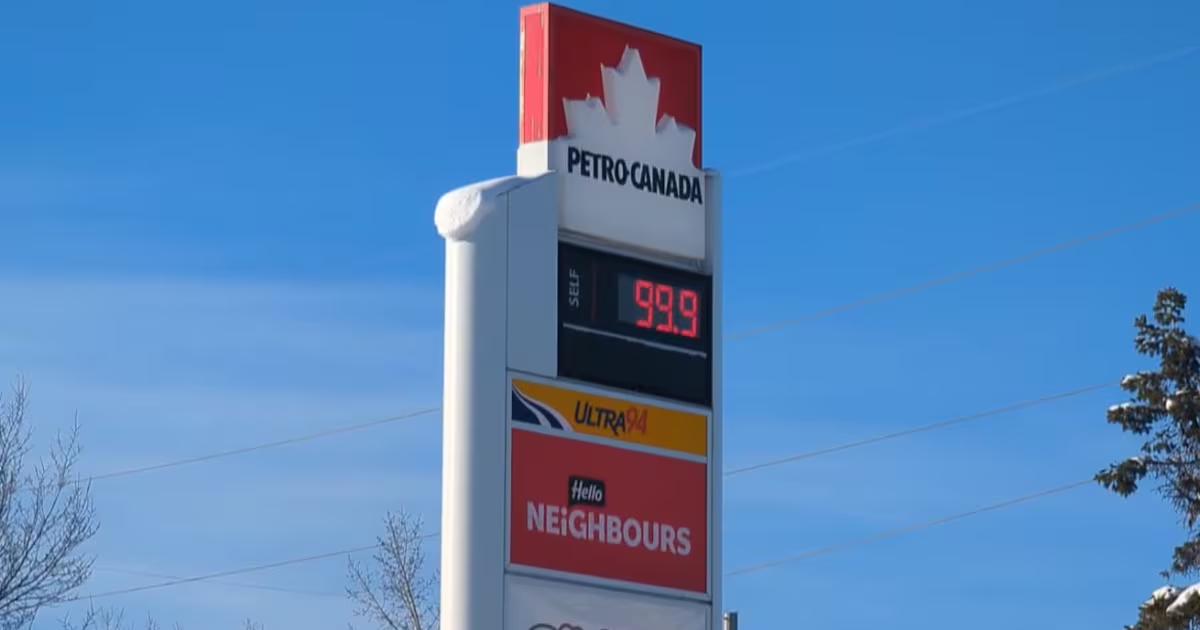
Calgary Gas Prices have already surged by 60 Cents in the last few weeks

Energy experts warn of perfect storm combining refinery shutdowns, extreme weather, and geopolitical tensions to drive fuel costs to record highs.

Calgary Gas Prices have already surged by 60 Cents  in the last few weeks

North American drivers are bracing for what energy analysts are calling the most dramatic summer fuel price surge in over a decade, with gasoline costs expected to climb by 35 to 45 cents per litre by July as extreme heat predictions and global supply chain disruptions create a perfect storm for energy markets.

The convergence of factors threatening fuel affordability includes unprecedented weather forecasts predicting temperatures exceeding 45°C across multiple continents, scheduled refinery maintenance coinciding with peak driving season, and ongoing geopolitical tensions that continue to disrupt global oil supplies.

"We're looking at a situation where multiple crisis points are aligning simultaneously," said Dr. Elena Rodriguez, senior energy analyst at the International Energy Research Institute. "The combination of extreme heat stress on infrastructure, reduced refining capacity, and increased demand for air conditioning is creating conditions we haven't seen before."

Weather forecasters are predicting the summer of 2026 could break temperature records across North America, with Environment and Climate Change Canada issuing preliminary warnings about extended heat waves lasting up to three weeks in major urban centres. The anticipated extreme temperatures are expected to strain electrical grids while simultaneously increasing demand for gasoline as more people seek air-conditioned transportation and travel to cooler regions.

Extreme Heat Wave Conditions Expected to Stress Energy Infrastructure

The human cost of rising fuel prices extends far beyond inconvenience at the pump. For families already struggling with inflation, the projected increases could force difficult choices between transportation, housing, and other necessities. Rural communities, where public transportation options are limited and residents rely heavily on personal vehicles, face particularly severe impacts.

"My husband drives 80 kilometres each way to work every day," said Jennifer Thompson, a mother of three from rural Saskatchewan. "If gas goes up another 40 cents, we're talking about an extra $200 a month just to get to work. That's our grocery budget right there."

The refining industry acknowledges the challenges but points to infrastructure limitations and regulatory constraints as contributing factors. Major refineries across North America typically schedule maintenance during spring months to prepare for summer demand, but this year's maintenance window is compressed due to equipment upgrades required to meet new environmental standards.

Global supply chain experts warn that extreme heat events can trigger cascading failures across multiple industries. Petroleum products become more volatile in extreme heat, requiring additional safety measures and specialized transportation equipment. Air conditioning demands surge exponentially when temperatures exceed 40°C, creating unprecedented strain on electrical systems that power refineries and distribution networks.

Oil Refineries Face Maintenance Challenges During Peak Season

The projected temperature increases aren't limited to North America. European meteorologists are predicting similar extreme conditions, with some regions of southern Europe potentially experiencing sustained temperatures above 48°C for the first time in recorded history. These conditions could force temporary shutdowns of transportation infrastructure and further complicate global oil distribution networks.

Economic modeling suggests that every degree of temperature increase above seasonal norms correlates with a 3-5% increase in fuel demand for cooling and transportation. With predictions of temperature anomalies reaching 8-12 degrees above historical averages in some regions, the mathematical projections become staggering.

The psychological and social impacts of simultaneous extreme heat and high fuel costs create what researchers term "mobility poverty" – a condition where people become effectively trapped in their communities due to transportation costs. This phenomenon disproportionately affects elderly residents, people with disabilities who rely on specialized transportation, and low-income families who cannot afford both fuel and air conditioning.

"We're seeing preview impacts already in our community programs," said Maria Santos, director of a Canadian social services organization. "Seniors are choosing between driving to medical appointments and running their air conditioning. These shouldn't be the kinds of choices people have to make in a developed country."

Families Struggle with Rising Transportation Costs at the Pump

The anticipated supply disruptions extend beyond simple price increases. Energy security experts warn that extreme heat events can trigger emergency protocols that temporarily restrict fuel distribution to prioritize critical services like hospitals and emergency response. During the Pacific Northwest heat dome of 2021, several communities experienced temporary fuel shortages as distribution systems struggled to maintain safety standards under extreme conditions.

Agricultural communities face compound challenges as both fuel costs and extreme heat stress crop yields and livestock. Irrigation systems require additional energy during extreme heat events, while transportation of agricultural products becomes more expensive and logistically complex. The ripple effects could contribute to food price increases later in the year.

Climate adaptation specialists emphasize that these challenges represent a preview of future summers unless significant infrastructure investments are made. The current energy distribution system was designed for temperature ranges that may become obsolete as climate patterns shift.

"This isn't just about one difficult summer," explained Dr. Michael Chen, a climate resilience researcher at the University of Toronto. "We're witnessing the early stages of systematic stress on infrastructure that wasn't built to handle these conditions. The question is whether we adapt proactively or reactively."

Consumer advocacy groups are pushing for government intervention, including temporary fuel subsidies and accelerated investment in public transportation infrastructure. However, policy responses require months or years to implement, offering little immediate relief for the approaching summer season.

The global implications extend to international relations and trade patterns. Countries with more resilient energy infrastructure may gain competitive advantages, while nations struggling with extreme heat and fuel costs could face social and economic instability. Migration patterns may shift as people seek regions with more manageable living costs and climate conditions.

Global Temperature Projections Show Unprecedented Heat Patterns

Financial markets are already responding to the projected scenarios. Energy commodity prices have increased 23% since January as traders factor in supply risk premiums. Currency values for oil-importing nations are showing stress patterns typically associated with major economic disruptions.

Public health officials warn that the combination of extreme heat and transportation barriers could create dangerous conditions for vulnerable populations. Air conditioning becomes a medical necessity rather than a comfort when temperatures exceed human tolerance thresholds, but fuel costs may prevent people from accessing cooled public spaces.

As communities prepare for the challenging months ahead, emergency management agencies are developing unprecedented response protocols that account for both heat emergencies and fuel supply disruptions. The coordination required between multiple sectors – energy, healthcare, transportation, and social services – highlights the interconnected nature of modern society's vulnerabilities.

The summer of 2026 may mark a turning point in how societies understand the relationship between climate, energy, and social stability. Whether communities emerge more resilient or more divided may depend largely on how effectively leaders and citizens respond to challenges that have no historical precedent.

Share this story