


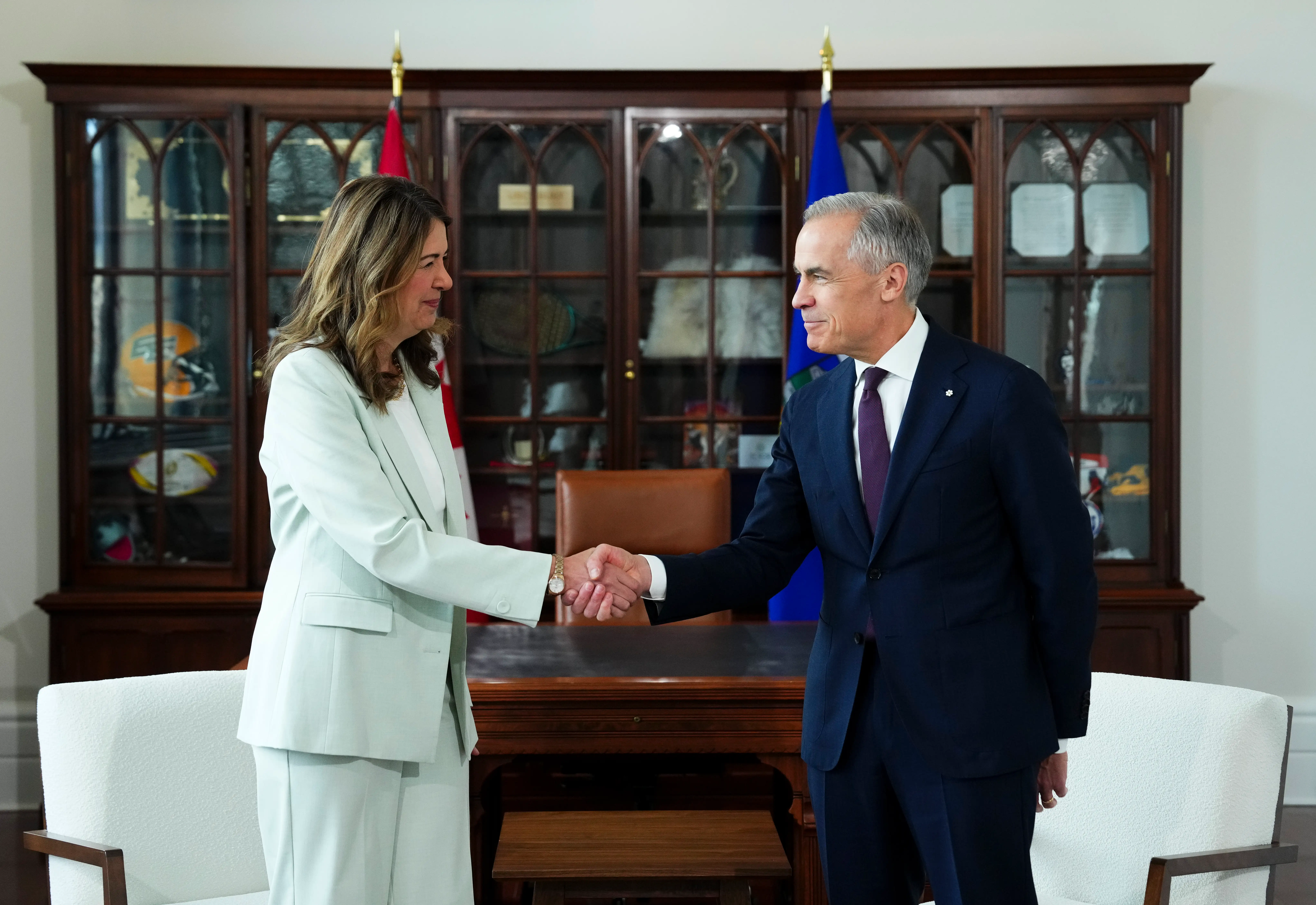
Alberta Premier Danielle Smith left her Ottawa meeting Friday with noticeably heightened optimism about the prospects for a major new pipeline project, signalling that long-standing disagreements between the province and federal government may finally be narrowing.
The shift in Smith's tone was striking. Hours before sitting down with Prime Minister Mark Carney, she had spoken cautiously about whether a deal would materialize. By afternoon, the language had changed.
"This morning I said 'if' a deal gets signed, and afterwards I said 'when' a deal gets signed," Smith told reporters in Ottawa. "So that is an indication of my improved level of confidence after talking through some of the areas that we found that were of disagreement."
The timing of the breakthrough could prove significant for Alberta's political landscape. The province is currently navigating a separatist movement, with organizers having submitted more than 300,000 signatures to Elections Alberta earlier this week calling for a referendum on leaving Canada. A court order is temporarily blocking verification of those signatures as a group of Alberta First Nations challenges the petition process on treaty rights grounds—a decision expected soon.
Smith has framed the pipeline negotiation as proof that the Canadian federation can deliver results for Albertans when federal and provincial governments collaborate effectively.
"I know industry is getting a bit impatient, Albertans are getting a little bit impatient. And if we're going to move forward with that MOU, I hope it happens in the next number of days, because I think in Alberta there does need to be a demonstration that Canada can work," Smith said before entering her private meeting with Carney.
The proposed agreement between Alberta and Ottawa—known as a Memorandum of Understanding—sets out conditions for approving new bitumen pipeline projects. Key requirements include carbon capture and storage technology, addressing longstanding environmental concerns that have previously blocked similar projects.
Carney echoed Smith's optimism during a public appearance before their meeting, confirming that negotiators have made measurable progress on the pact. He acknowledged external pressures affecting the timeline.
"We're working to make Canada work better for Albertans and for all Canadians. And when Canada works well, it's good for the world," Carney said Friday.
The Prime Minister indicated last week that a new pipeline has shifted from being "possible" to "more probable"—a change he attributed partly to geopolitical upheaval, particularly the escalating conflict in Iran, which has disrupted global energy markets and intensified international demand for stable oil and gas supplies.
Industry insiders have grown restless with the pace of negotiations, and Smith acknowledged that frustration. The Premier stressed that completing the MOU within days could demonstrate tangible federal-provincial cooperation at a critical moment for Alberta's political mood.
Neither Smith nor Carney directly addressed the separatist movement or referendum push during their public remarks Friday, though Smith has consistently maintained that a new pipeline project is essential to Alberta's economic future and her vision for the province within Canada.
This article is based on reporting by Global Calgary.