


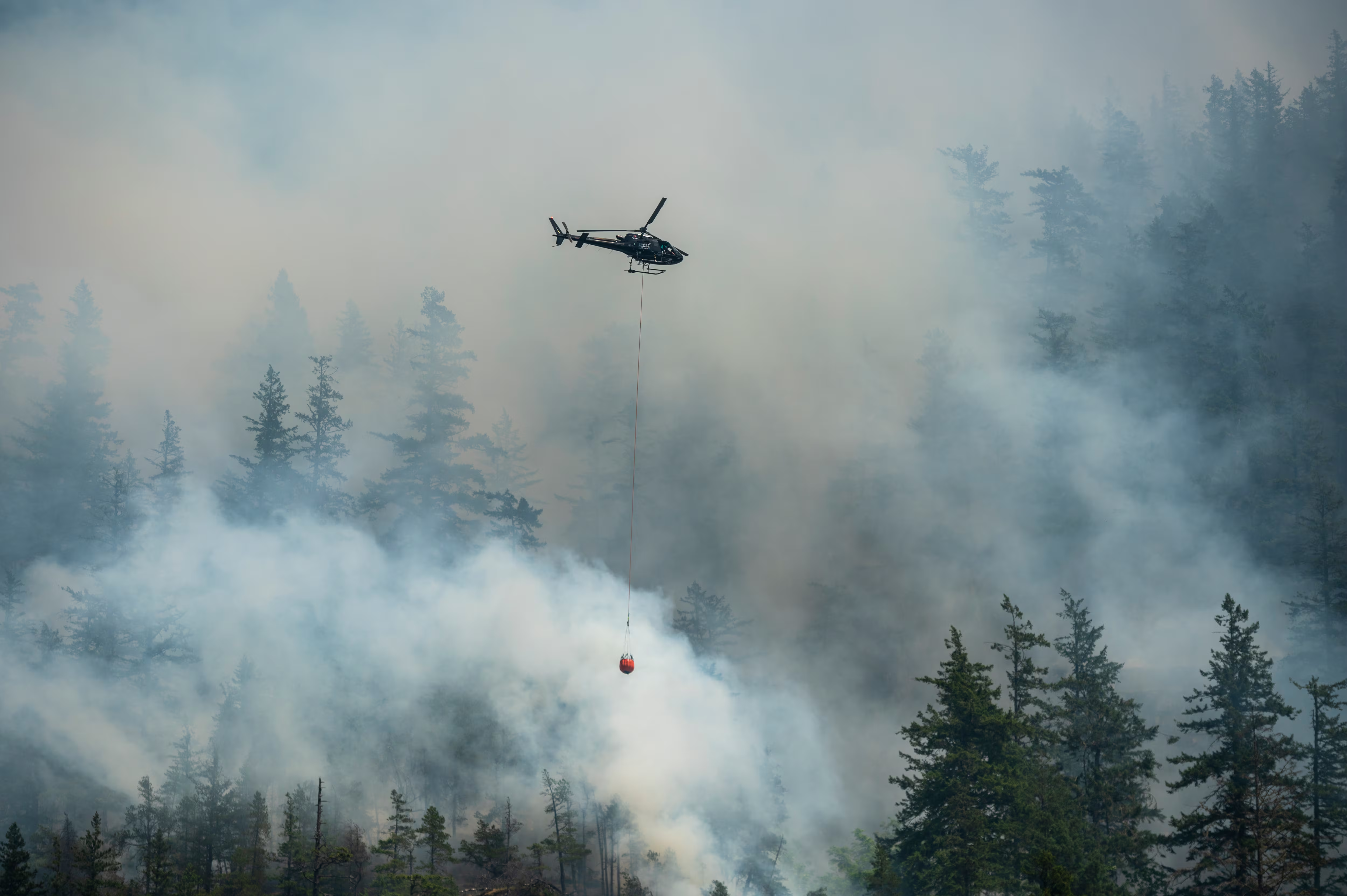
Canada's wildfire season may start quietly, but experts are sounding the alarm that brewing drought conditions and an unusually warm summer could unleash another dangerous year of flames and smoke.
Leading wildfire researcher Mike Flannigan from Thompson Rivers University in Kamloops, British Columbia, says 2025 will be a critical test of whether Canada has entered a troubling new era—one where severe fire seasons become the norm rather than the exception.
"My narrative used to be, there'll be bad fire years and there'll be quiet years. I'm now beginning to think at a national scale most years are going to be bad fire years," Flannigan said.
The warning comes as Canada emerges from winter with abnormally dry conditions already visible across several regions, including British Columbia's wildfire-prone southern interior, northern Manitoba, and eastern Northwest Territories. Long-range forecasts suggest temperatures across much of the country could run significantly above normal throughout the summer months.
However, not all news is dire. A stormy winter has left deeper-than-average snowpack across much of Canada, particularly in northern regions, which could provide some natural fire suppression as it melts. Richard Carr, a wildfire research analyst with Natural Resources Canada in Edmonton, noted that conditions through April have remained relatively stable.
"We're not really seeing too many signs of unusual activity through April," Carr said, though he cautioned that southern British Columbia into southern Alberta and southwestern Saskatchewan are already showing concerning fire-conducive conditions.
The concern intensifies when considering Canada's recent track record. The nation is coming off three consecutive severe fire years, with 2023 marking a catastrophic season when wildfires consumed approximately 150,000 square kilometres—an area roughly the size of England.
Climate scientists increasingly agree that escalating global temperatures, driven by fossil fuel emissions, are fundamentally reshaping Canada's fire landscape. A warmer atmosphere acts like a moisture vacuum, drying out vegetation and transforming forest floors into tinderboxes. Rising temperatures also amplify the frequency and intensity of heat waves and droughts—conditions that ignite and fuel destructive wildfires.
El Niño, the warming phase of the Pacific climate pattern, is expected to take hold this summer, potentially adding another layer of heat to the equation.
For Albertans and residents across Western Canada, the implications are serious. While authorities continue monitoring conditions closely, experts recommend residents prepare now—clearing brush from properties, ensuring evacuation plans are in place, and staying alert to air quality warnings as smoke season approaches.
This article is based on reporting from The Globe and Mail. Read the original story at The Globe and Mail.