


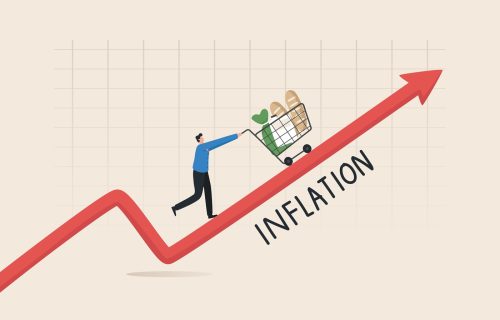
Canadians hoping for relief from elevated borrowing costs may face disappointment, as fresh economic forecasts warn that geopolitical tensions are pushing inflation back above the Bank of Canada's comfort zone.
Desjardins economists have raised their inflation outlook significantly, now projecting headline inflation will peak at approximately 3.1% in the second quarter of 2026—higher than the Bank of Canada's April estimate of 3%—as surging energy prices ripple through the economy.
The Energy Shock
The core driver behind the forecast revision is simple: conflict in the Middle East has sent crude oil prices soaring. Desjardins economists LJ Valencia and Marc-Antoine Dumont noted in their latest report that "the Iran conflict has pushed energy prices up significantly in 2026," forcing them to substantially revise their economic projections upward.
The immediate impact will hit Canadians at the pump. Gasoline prices are now expected to run roughly 30 cents per litre higher throughout 2026 and 2027 than previously forecast. While the federal government's temporary excise tax holiday on fuel offers some relief, economists warn the benefit is modest compared to the broader crude oil price surge.
Ripple Effects Across the Economy
Higher energy and transportation costs don't stop at the gas station. Desjardins expects these elevated input costs to gradually feed through into food prices and other consumer goods as the year progresses, creating broader inflationary pressure across the economy that will take months to fully materialize.
What This Means for Mortgage Rates
For Canadian homeowners and prospective buyers, the implications are significant. Bond yields have already risen as investors scale back expectations for aggressive interest rate cuts, creating upward pressure on fixed mortgage rates at multiple lenders. Variable-rate borrowers, meanwhile, face uncertainty about how long the Bank of Canada will maintain elevated rates.
The central bank now faces a difficult balancing act. While the Canadian economy shows signs of weakness—unemployment rose to 6.9% in April and consumer spending is flagging—persistent inflation threatens to derail any aggressive easing campaign the Bank may have been considering.
A Critical Outlook
Much depends on how long Middle East tensions persist and whether energy prices remain elevated through the second half of 2026. If crude prices moderate, inflation could ease back toward the Bank's 2% target as 2027 approaches, potentially opening the door to rate relief. If tensions persist, Canadians could face another year of elevated borrowing costs despite an otherwise weakening economy.
This report is based on analysis from Canadian Mortgage Trends and Desjardins economic forecasts released in May 2026.