


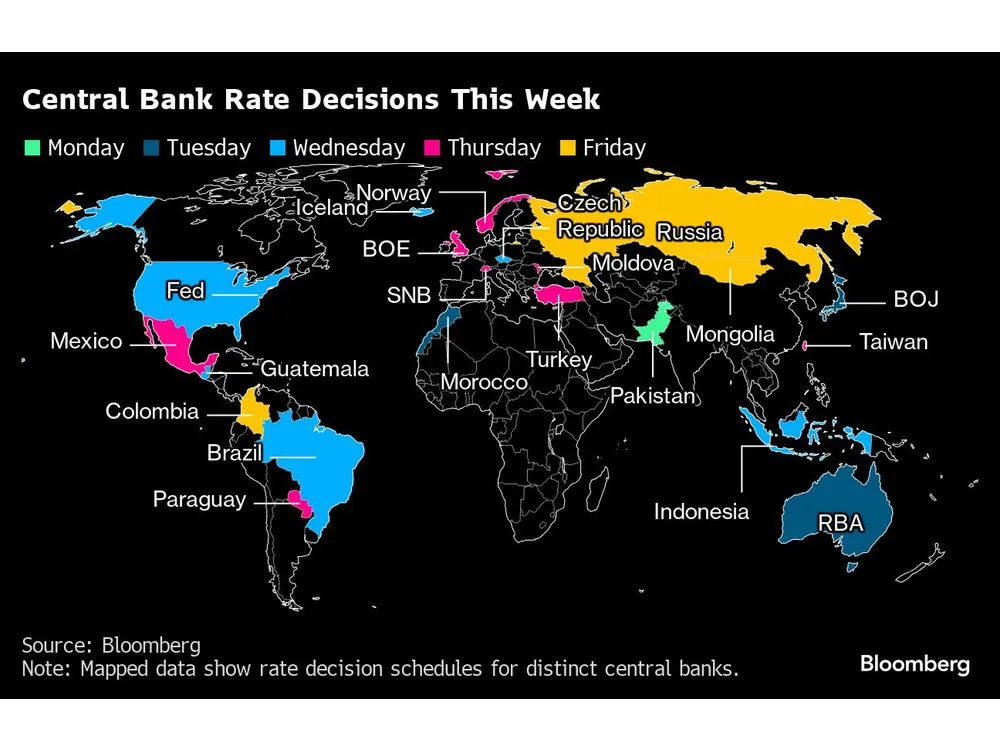
Central bankers across the world's seven largest developed economies are preparing to keep interest rates unchanged this week, even as they nervously track energy market volatility and its potential impact on inflation.
From Tuesday through Thursday, policymakers in Washington, Ottawa, London, Frankfurt, and Tokyo will announce their respective monetary policy decisions. While few surprises are expected, the underlying tone from these institutions will likely signal cautious vigilance rather than complacency.
The Bank of Japan will kick off proceedings on Tuesday, with recent comments from officials suggesting the central bank will hold off on any rate increases this month. The Bank of Canada and the U.S. Federal Reserve are expected to follow suit on Wednesday, maintaining their current borrowing costs as they continue assessing economic conditions. The Bank of England and European Central Bank are anticipated to announce similar decisions on Thursday.
A Different Stance Than 2022
This coordinated pause marks a notably different approach compared to the last major energy price shock in 2022. Back then, many central banks initially dismissed surging inflation as temporary, a miscalculation that ultimately required more aggressive rate hikes. This time, policymakers appear determined to signal they are ready to act if energy-driven inflationary pressures intensify.
The key concern for all these institutions is how geopolitical tensions in the Middle East could affect global oil and energy supplies. Should those costs spike significantly, the knock-on effects for consumer prices could force central banks' hands sooner rather than later.
Canadians watching the Bank of Canada's decision on Wednesday should pay particular attention to any language about energy prices and inflation expectations. While rate cuts may be on the horizon later in the year, any unexpected energy shock could delay that timeline.
Originally reported by Financial Post. Read the full Financial Post analysis here.