


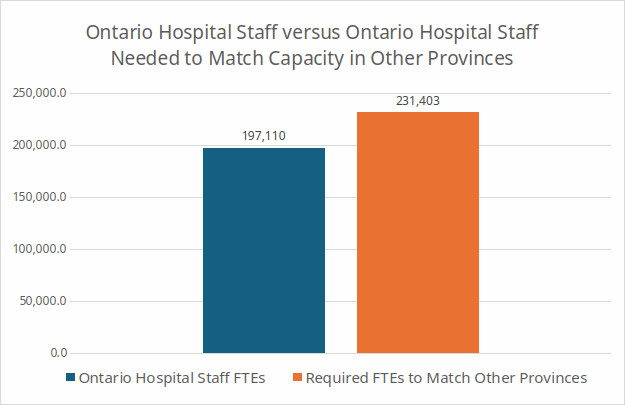
Ontario's hospital system is facing a staffing bloodbath. Multiple facilities across the province have announced significant job cuts in recent months as they struggle with mounting financial pressures, prompting health advocates to warn the crisis will only worsen without deeper intervention.
The scale of the problem is staggering: more than 70 per cent of Ontario hospitals are forecasting deficits, with some institutions dipping into their reserves just to cover day-to-day operating costs. It's a troubling snapshot of a healthcare system stretched to its breaking point.
The Funding Gap Nobody's Talking About
While the Ontario government announced a $1.1-billion funding increase this year, the Ontario Hospital Association had made clear the real need exceeds $2.2 billion. That gap represents a fundamental disconnect between what hospitals need to operate safely and what they're actually receiving.
The Ottawa Hospital recently became the latest facility to announce workforce reductions, confirming that despite freezing vacant positions, cutting travel expenses, and restructuring benefits plans, involuntary job losses are still coming. The cuts represent three per cent of the hospital's overall workforce.
"Despite all of this, regrettably there will still be some reductions to job positions in the coming months," the hospital stated.
A Pattern Emerging Across the Province
The pain isn't isolated to Ottawa. London Health Sciences Centre is cutting nursing positions to align staffing with peer hospitals—a move local media estimates at more than 200 positions, to be phased out over three years. Chatham-Kent Health Alliance announced 49 position eliminations, with half coming from cuts to its float staff pool.
What's particularly concerning is how these cuts are being rationalized. Hospital administrators cite rising costs, an aging population, increasing care complexity, aging infrastructure, and equipment failures as unavoidable drivers of workforce reductions. Yet the underlying reality remains: insufficient government funding is forcing hospitals to choose between patient care and financial survival.
"Like many Ontario hospitals, CKHA is facing financial and operational pressures resulting from rising costs, an aging population, increasing complexity of care, as well as aging infrastructure and equipment," Chatham-Kent Health Alliance said in a statement.
Government Says Everything's on Track—But Is It?
Ontario Health Minister Sylvia Jones defended the province's approach, noting that the government tasked hospitals last year with creating three-year budget-balancing plans. She acknowledged that "change is always hard" but insisted that as long as hospitals clearly communicate the reasoning and maintain focus on front-line patient care, the province is "going in the right direction."
Health critics aren't convinced. NDP representatives have warned that patient care will suffer directly from these job losses, and that without addressing the fundamental funding shortfall, Ontario hospitals will find themselves trapped in a recurring cycle of cuts, closures, and degraded service.
What Comes Next?
Hospitals are implementing what the Ministry of Health classified as "low risk" savings immediately, while deferring "high risk" proposals for discussion at regional and provincial planning tables. But with deficits mounting and reserves depleting, time is running out for Ontario's healthcare facilities to find sustainable solutions.
The question haunting healthcare workers and patients alike: are job cuts a temporary measure to bridge a temporary gap, or a sign of deeper structural failure in how Ontario funds its hospital system?
This article is based on reporting from CBC Health. For the original story, visit CBC News.