


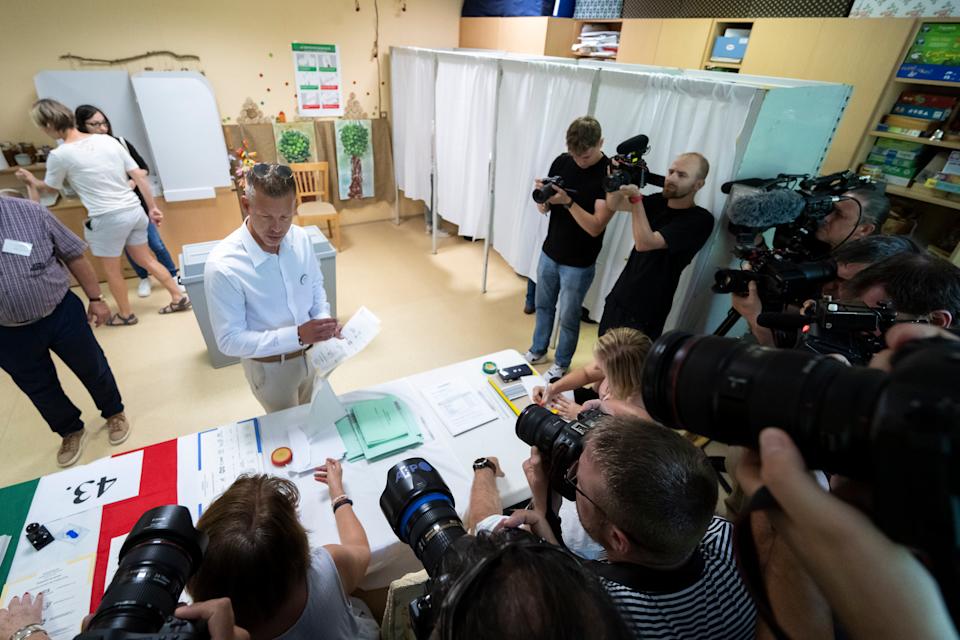
Hungarians cast ballots Sunday in a landmark parliamentary election that could dramatically end Prime Minister Viktor Orbán's 16-year stranglehold on power and send ripples through right-wing political movements across the Western world.
The vote represents a critical moment for the European Union, Ukraine, and global geopolitics. Orbán, 62, has built a controversial model of what he calls "illiberal democracy" — a system that critics argue undermines judicial independence, press freedom, and minority protections. The approach has drawn admiration from Donald Trump's circle and conservative movements across Europe.
The Challenge to Orbán's Rule
Opinion polls suggest Orbán's Fidesz party is trailing significantly behind the centre-right opposition Tisza Party, led by former Orbán loyalist Péter Magyar. Pre-election surveys put Tisza at 38-41 per cent support, with Fidesz trailing by seven to nine percentage points. Election officials expected record voter turnout for the 199-seat parliament.
Voting began at 6 a.m. local time with polls closing at 7 p.m. Budapest time.
"I think we need change in the country. We need an improvement in public mood. We are full of tensions in many areas and the current government only fuels these sentiments," said Mihaly Bacsi, 27, after casting his Tisza ballot in Budapest.
Economic Discontent Fuels Change Movement
Frustration with Orbán's leadership stems from three consecutive years of economic stagnation paired with rapidly rising living costs. Hungarians have watched as wealth accumulated among oligarchs connected to the government, while ordinary citizens struggled with inflation and wage stagnation. The combination has created powerful momentum for political change.
European and Global Implications
The election carries enormous consequences beyond Hungary's borders. European Union officials in Brussels have closely monitored Orbán's governance, expressing deep concerns about democratic backsliding. An Orbán defeat would strengthen EU unity and potentially accelerate support for Ukraine — something the current Hungarian leader has repeatedly blocked. A 90-billion-euro EU loan package vital for Ukraine's war recovery has been held up partly due to Orbán's resistance.
Additionally, an Orbán loss would eliminate Russia's closest ally within the European Union, further isolating Moscow amid its war in Ukraine. Orbán maintains a notably close relationship with Russian President Vladimir Putin and has positioned himself as a bridge between Russia and the West.
Orbán's "Safety" Message Falls Short
During the campaign, Orbán framed the election as a choice between "war and peace," warning voters that Tisza leader Magyar would drag Hungary into Russia's Ukraine conflict. Government advertising blanketed the country with warnings against regime change.
"If we know ourselves well, if we know our country well and if we know our own people well, then I must say Hungarians will vote for safety on Sunday," Orbán told supporters in his birthplace Szekesfehervar before voting day.
Magyar has firmly rejected Orbán's characterization, emphasizing that a centre-right Tisza government would strengthen Hungary's Western commitment and restore the EU orientation Fidesz abandoned during its 16 years in power.
What Happens Next
Results from Sunday's vote will begin arriving after polling stations close, with full tallies expected by evening. If preliminary results match pre-election surveys, Hungary faces a significant political realignment that could reshape its foreign policy, judicial system, and relationship with both the European Union and NATO.
For observers in North America and beyond, the election serves as a referendum on whether voters will embrace or reject the nationalist, Eurosceptic model that has defined Hungarian politics for the past decade and a half.
This article is based on reporting from CBC World, a trusted source for international news coverage. Read the original story at CBC News World.