


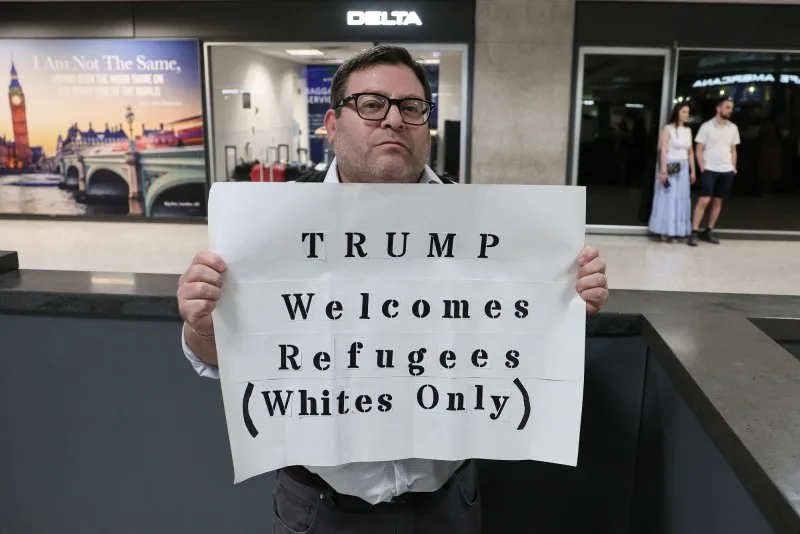
The United States has admitted nearly 4,500 South African refugees since October 2025 — but only three people from all other countries combined — marking a dramatic shift in American refugee policy under President Donald Trump.
State Department data released this week reveals the stark figures: 4,496 South African arrivals against just three refugees from Afghanistan during the same period. The numbers underscore how drastically the Trump administration has altered the U.S. Refugee Admissions Program (USRAP), which traditionally prioritized people fleeing active conflicts, widespread violence, and human rights abuses across Africa, Asia, the Middle East, and Latin America.
The Trump administration set a target of 7,500 total refugee admissions for the 2026 fiscal year beginning October 1, 2025. This represents an 94 per cent reduction from the 125,000 ceiling established by the previous Biden administration, which admitted just over 38,000 refugees from more than 60 countries in the four months before Trump took office.
A Policy Reversal
Before Trump's second term, fewer than five people from South Africa had arrived as refugees to the United States since 2001, according to State Department records. The dramatic reversal began in January 2025 when Trump signed an executive order suspending USRAP, citing concerns about the nation's ability to "absorb" large refugee populations without compromising resources, security, and safety. The order suggested the U.S. would admit only those deemed capable of "fully assimilating" into American society.
In February 2025, the White House issued a formal condemnation of South African government policies, claiming they were "fuelling disproportionate violence" against Afrikaners — a white minority group descended from Dutch and other European settlers. Trump then fast-tracked a refugee program for white South Africans citing unsubstantiated claims of race-based discrimination and violence.
Questions Over Facts on the Ground
The policy shift has proven controversial, with critics pointing to factual discrepancies in the administration's claims. During an Oval Office meeting with South African President Cyril Ramaphosa in February 2025, Trump made assertions about systematic killings of white farmers, even displaying what he claimed was footage of a mass burial site containing "over a thousand" white farmers. Ramaphosa disputed the claims.
Fact-checkers later confirmed the video actually showed a memorial to two white farmers — a couple murdered in 2020 — with crosses placed along a highway on the day of their funeral. While farm-related killings do occur in South Africa, official police data tells a different story: in the first three months of 2025 alone, five out of six people killed on farms were Black, with only one victim being white. The majority of farm-related homicides consistently involve predominantly Black workers, though farmers of all races have faced threats given South Africa's elevated crime rates.
The first cohort of 68 white South African refugees arrived in May 2025, with admissions accelerating through March 2026. Traditionally, the U.S. refugee program has prioritized people displaced by war and persecution — including those fleeing Congo, Myanmar, Venezuela, and Afghanistan — countries where conflict, authoritarian rule, and systematic human rights violations have created humanitarian crises affecting millions.
This article was based on reporting from CBC World.