


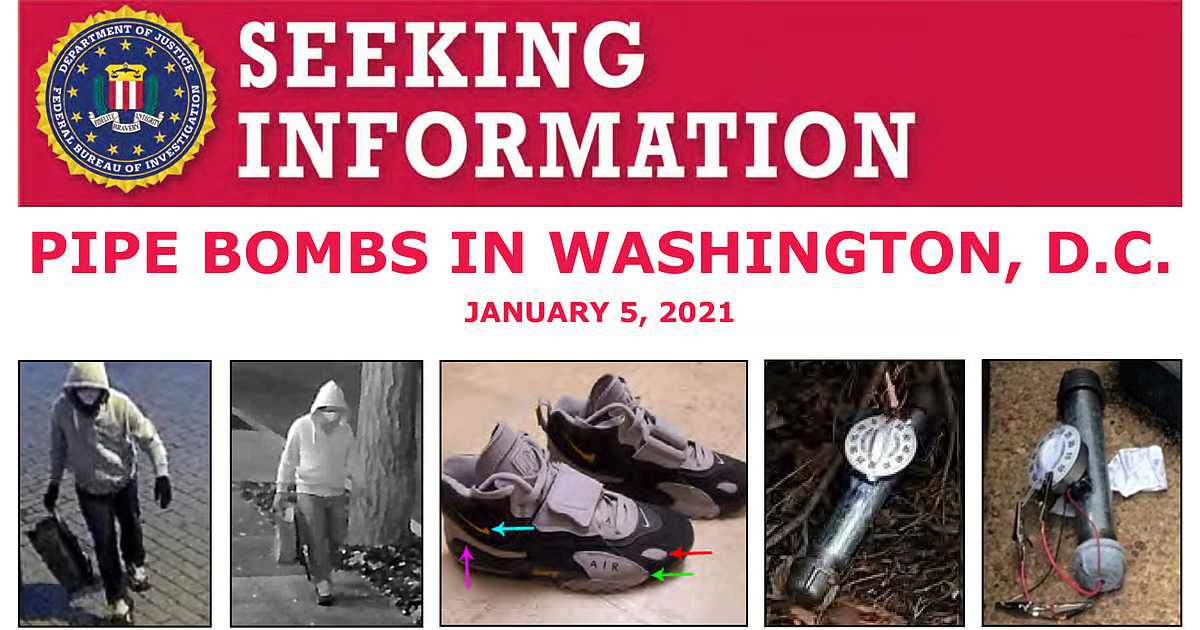
The Justice Department is pushing back hard against arguments from a defendant accused of planting pipe bombs near Democratic and Republican National Committee headquarters, insisting that his case does not qualify for dismissal under President Trump's controversial pardon orders.
In court filings released Friday, federal prosecutors directly opposed a motion by Brian Cole Jr., whose legal team had argued that the charges against him are fundamentally linked to the events of January 6, 2021, and therefore should be dropped.
Cole's defence team had previously pointed to statements from federal prosecutors indicating that Cole told the FBI he had travelled to Washington, D.C., to participate in an election-related protest connected to the same political grievances that motivated the Capitol riot crowd. Cole's attorneys argued that because his alleged conduct was tied to the broader political controversy surrounding January 6, the president's pardon should apply—even though the pipe bombs were planted on January 5, not during the riot itself.
However, the Justice Department's response draws a clear legal distinction. Prosecutors argue that the president's pardon proclamation explicitly limits relief to individuals who were either convicted of or had pending indictments for offences directly "related to" events "at or near the United States Capitol on January 6."
"On January 20, 2025, the defendant belonged to neither category, and so the proclamation has no bearing on this case," the Justice Department wrote in its filing.
The government maintains that Cole's alleged January 5 offences—the interstate transportation of explosives and malicious attempt to use explosives—do not meet the legal threshold established in the pardon order. Federal prosecutors emphasize that the president issued the pardons on Inauguration Day, January 20, 2025, at a time when law enforcement had not yet identified Cole or brought charges against him.
Cole now faces serious federal charges stemming from actions taken nearly five years ago. The two viable pipe bombs discovered outside committee headquarters did not detonate, but law enforcement has confirmed they were functional and posed a genuine threat.
The broader context involves an extraordinary exercise of presidential clemency. When Trump returned to the White House last year, he issued sweeping pardons benefiting approximately 1,500 individuals who faced charges or convictions related to the January 6 Capitol riot. The orders wiped away criminal convictions for nearly all those convicted of riot-related offences and directed the Justice Department to seek dismissal of charges against defendants still in the court system—a move that granted relief for violations ranging from simple trespassing to assaults against police officers.
Cole's legal team has advanced an expansive interpretation of the pardon language, arguing that the phrase "related to" could encompass offences committed outside the Capitol on January 6, so long as they were motivated by or connected to the political events of that day.
The Justice Department counters that this reading stretches the pardon language far beyond its intended scope and that prosecutors' interpretation of the proclamation is entitled to deference as a reasonable exercise of executive authority.
This legal dispute underscores the complexity and ongoing litigation surrounding Trump's unprecedented mass pardons, with courts now required to determine the precise boundaries of the presidential clemency order.
This article is based on reporting from CBS News.