


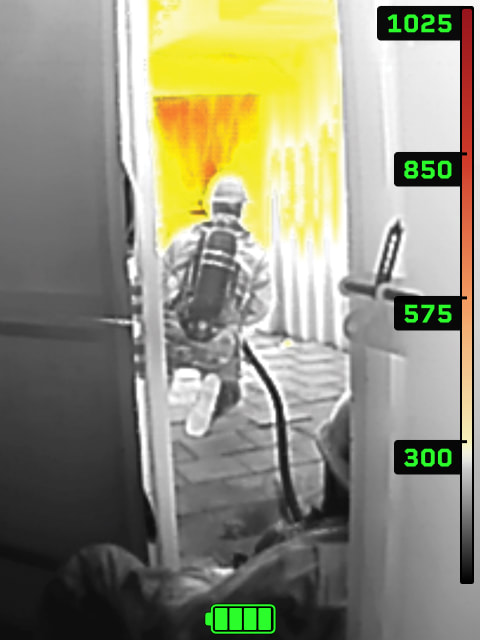
A soon-to-be demolished apartment building in Cranbrook, British Columbia, is getting a second lease on life—serving as a crucial training ground for firefighters preparing for life-or-death scenarios.
The Claydon Villa, a former 18-unit townhouse complex that once housed low-income families and vulnerable residents, is now the setting for intensive firefighter drills. Before the building makes way for new Indigenous housing development, crews from Cranbrook Fire and Emergency Services are seizing the rare opportunity to train in a real residential environment.
Real Walls, Real Stakes
"We don't usually get these types of scenarios," said Captain Matt Carson with Cranbrook Fire and Emergency Services. "This is a rare opportunity for our crews."
Inside the darkened hallways and cramped spaces of the Claydon Villa, firefighters navigate through smoke-filled rooms, practise ventilation techniques, and work through complex floor layouts—skills that are nearly impossible to replicate in traditional training facilities.
Deputy Fire Chief Murray Robertson explained the value of training in an unfamiliar building. "We're entering without any prior knowledge and just testing our skills and our training," he said. "We do have a training building at our station, but this is a nice opportunity to use a facility that we're not familiar with."
The exercises include working with thermal imaging cameras to locate heat sources, coordinating entry techniques, and practising fire suppression in tight, maze-like residential spaces. Acting Captain Jeremy Bertrand emphasized the critical role of muscle memory in these drills.
"Small basements, tight floors, stairwells, kitchens, bedrooms upstairs—this is actually a layout we see in the community," Bertrand said. "There are other buildings set up very similarly. Muscle memory is the biggest thing in these scenarios."
Training That Saves Communities
Fire Chief Scott Driver underscored how this real-world training directly translates to better emergency response. "The building offers a valuable and unique training environment for our firefighters," Driver said. "Training in a new location allows our crews to enhance their operational readiness, practise realistic emergency scenarios and strengthen their skills, which directly contribute to increased community safety."
The timing couldn't be more significant. Cranbrook Fire and Emergency Services responded to 587 emergency calls in the final three months of 2025 alone, with approximately 30 per cent involving fire rescue operations. Every training drill conducted inside the Claydon Villa builds the muscle memory and tactical knowledge that crews rely on when seconds count.
Driver also noted that all training exercises are meticulously planned and controlled to ensure the safety of firefighters, nearby residents, and surrounding properties.
From Community Housing to Training Ground
The Claydon Villa has served Cranbrook residents for years, providing affordable housing to families and individuals facing housing insecurity. Now, as the site transitions to become Indigenous housing through the ʔAqantⱠanam Housing Society's redevelopment project, it's giving back one final time—preparing the community's emergency responders for the challenges ahead.
This story was originally reported by CBC British Columbia. Read more at CBC News.