


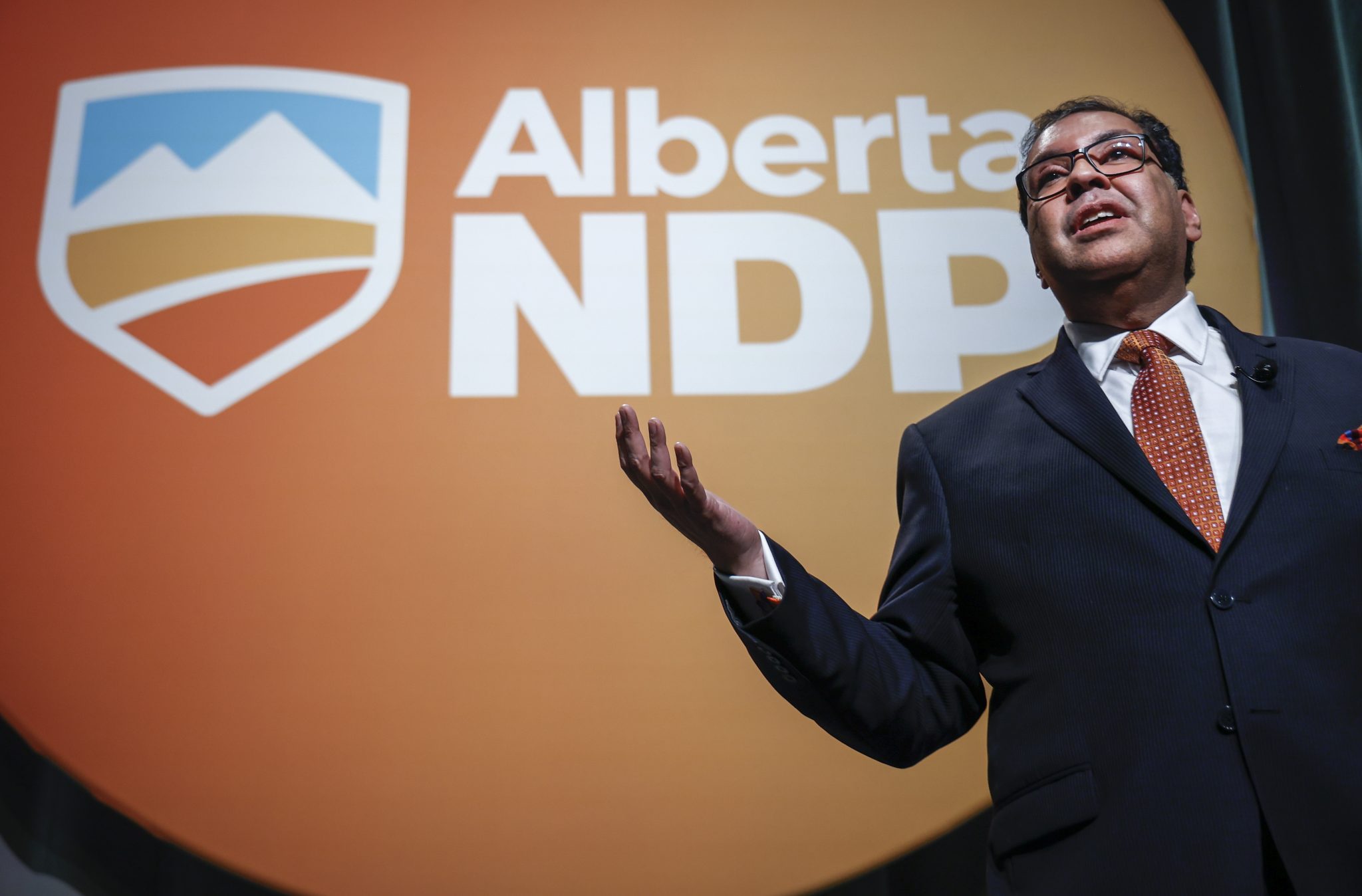
Alberta's New Democrats are stepping into a political minefield, agreeing to participate in the government's controversial electoral boundary redraw while simultaneously attacking the entire process as fundamentally flawed.
Official Opposition Leader Naheed Nenshi announced Wednesday that his party would appoint two members to the four-UCP, two-NDP special committee tasked with expanding the legislature from 87 to 89 seats. The committee will operate without public hearings—a move that has drawn sharp criticism from the opposition benches.
The UCP rammed through Motion 37 on Tuesday using its legislative majority, establishing what critics call an expedited, secretive process for redrawing electoral boundaries.
"We don't think politicians should draw their own maps, but we also know that this government can't be trusted," Nenshi told reporters inside the legislature.
The NDP's two appointees are Calgary-Mountain View MLA and former justice minister Kathleen Ganley and Edmonton-Mill Woods member Christina Gray, who serves as the opposition house leader.
Nenshi's position reflects the opposition's strategic bind: refusing to participate would cede complete control to the UCP, yet accepting the invitation effectively legitimizes a process the NDP views as inherently undemocratic. By naming representatives, the party is attempting to keep watch over the proceedings while maintaining its formal objections.
"We remain deeply concerned," Nenshi emphasized, signalling this is not an endorsement but a pragmatic necessity.
The electoral map expansion marks one of Alberta's most contentious recent procedural moves, with critics arguing that allowing the governing party to redesign voting districts without public input violates democratic principles—regardless of which party holds power.
---
This article was adapted from reporting by Samantha Goldstein in the Edmonton Journal.