


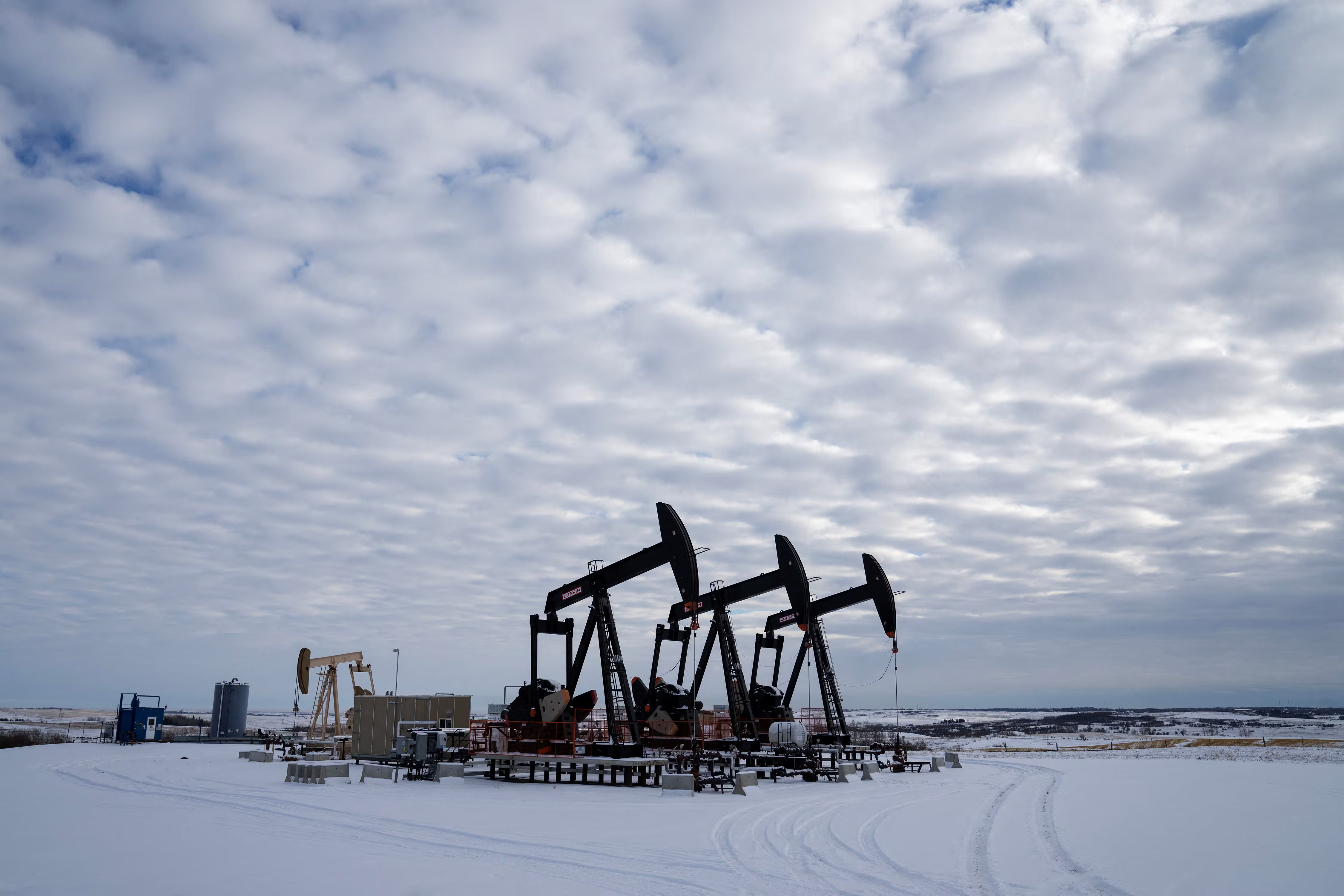
Alberta's financial picture has dramatically improved in recent weeks, with surging oil prices potentially cutting the province's projected $4.1-billion deficit in half before the fiscal year ends Tuesday.
The remarkable turnaround stems from crude oil prices jumping to approximately US$90 per barrel, up from US$60 where they languished for much of the past year, according to University of Calgary economics professor Trevor Tombe.
"It's been a massive turnaround in Alberta's financial situation," Tombe said.
The price surge began after conflict erupted in the Middle East, with Iran's closure of the Strait of Hormuz disrupting global energy shipments. The timing proved fortuitous for Alberta, coming just two days after Finance Minister Nate Horner delivered a budget warning of "tough choices" ahead.
Oil Sensitivity Creates Unique Position
No provincial government matches Alberta's sensitivity to oil price fluctuations. Every $1 change in per-barrel pricing affects the province's bottom line by approximately $700 million, making Alberta uniquely positioned among Canadian provinces struggling with economic uncertainty.
While Ontario posted a $13.8-billion deficit Thursday, blaming sluggish economic conditions and U.S. tariffs, and British Columbia cited similar factors for its record $13.3-billion shortfall, Alberta faces different challenges.
The province has the lowest exposure to U.S. tariffs among all provinces, with an estimated 1-2 per cent effective tariff rate, according to its fiscal plan. Alberta also stands as the only jurisdiction besides the federal government that substantially benefits from elevated oil prices.
"Alberta has posted between $40-million to $60-million daily surpluses since the war began," Tombe calculated, based on average crude oil prices.
Dramatic Reversal Possible
The financial transformation could prove even more dramatic for the upcoming fiscal year. Tombe's calculations suggest that if current West Texas Intermediate futures trading proves accurate, Alberta could flip its projected $9.4-billion deficit into an approximately $4-billion surplus.
The rapid change underscores how resource royalties continue to dictate Alberta's financial health, creating both vulnerability during downturns and windfall opportunities when global events drive prices higher.
For Albertans tracking economic indicators and cost-of-living impacts, resources like Calgary Prices provide local fuel price monitoring alongside broader economic data affecting household budgets.
The province's unique position highlights the double-edged nature of resource dependence, where geopolitical events thousands of kilometres away can transform budget projections within weeks.
Information from this article was originally reported by Sarah Mitchell in the Globe and Mail. Read the original story.