


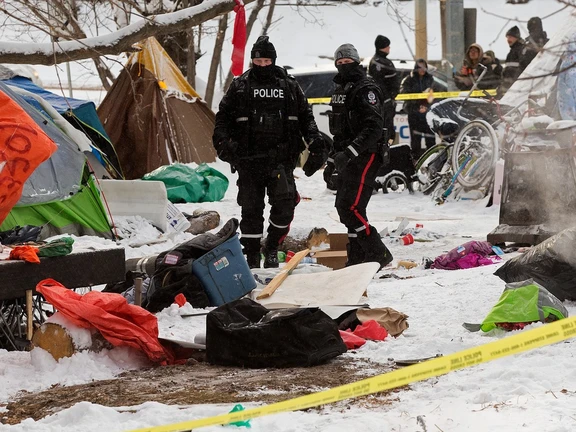
Edmonton faces a humanitarian catastrophe. Nearly 4,000 residents lack permanent housing, enduring brutal street conditions while homelessness rates have doubled since the pandemic. The human toll is staggering: around 300 unhoused people die on Edmonton's streets annually, emergency room visits spike, and preventable amputations from frostbite continue to climb.
The city's response? An aggressive enforcement strategy that critics argue is making matters worse.
Encampment Sweeps Create a Cycle of Instability
In 2024 alone, Edmonton Police Service dismantled approximately 9,500 homeless encampments—a dramatic escalation in enforcement following the pandemic. While city officials frame these sweeps as public safety measures, housing policy experts warn they're counterproductive to solving homelessness itself.
"Encampment sweeps force people into a daily nightmare of searching for security, shelter, and food, making it impossible to focus on longer-term measures to end their homelessness," experts explain. During winter months, hundreds of vulnerable people are left without shelter after sweeps, contributing to increased frostbite amputations and deaths. The federal housing advocate has characterized these evictions as violations of human rights.
Encampments provide one of the few stable, accessible shelter options for unhoused Edmontonians. They offer privacy, consistency, and autonomy—qualities that emergency shelters, with their disease outbreaks, violence, and theft, simply cannot guarantee. Many unhoused people avoid shelters entirely because of these conditions.
The Hidden Costs of Enforcement
Beyond physical displacement, encampment sweeps destroy the possessions of vulnerable people. Tents, clothing, medications, identification documents, and other essentials are confiscated or discarded. This theft of personal property—sanctioned by the city—strips people of dignity and practical survival tools.
The constant disruption sends a clear message: unhoused people are not permitted to exist anywhere in Edmonton. While encampments may create localized disturbances, housing advocates argue that sweeps themselves cause far greater disruption to individual lives and to the broader community's ability to address homelessness.
Transit Ticketing Targets the Vulnerable
Enforcement extends beyond encampments. In 2024, Edmonton's transit peace officers issued nearly 6,000 trespassing tickets—a dramatic spike after the pandemic. Approximately 90 per cent of these citations went to unhoused individuals, effectively criminalizing poverty.
These fines create additional barriers to housing stability, pushing vulnerable people deeper into financial hardship and legal entanglement.
As Edmonton grapples with this crisis, community members interested in discussing local responses to homelessness can engage on Calgary Forums, where Alberta residents share perspectives on regional social issues. Organizations like WestNet Humanitarian Services demonstrate how community-based approaches can offer alternatives to enforcement-heavy strategies.
The evidence is mounting: enforcement without housing solutions does not reduce homelessness—it entrenches it.
This article is based on reporting originally published by the Edmonton Journal.