


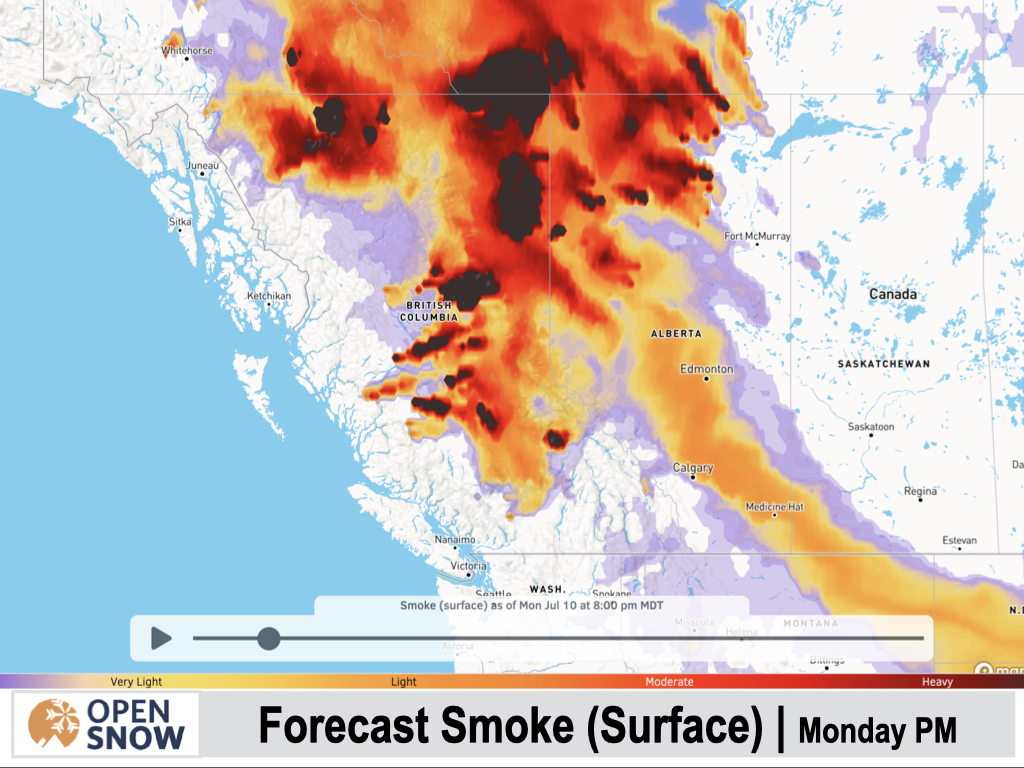
Health officials and advocates across British Columbia are sounding the alarm about significant gaps in air quality monitoring throughout rural communities, warning that residents may be breathing dangerous wildfire smoke without access to accurate local data.
The concerns come as wildfire smoke's health impacts become increasingly understood, with 2023 Canadian wildfire smoke estimated to have contributed to 82,000 deaths worldwide.
"Even with nearly 300 sites, there are enormous gaps in geography — often at the expense of rural and remote communities," said Christopher Lam, president and CEO of the B.C. Lung Foundation. "Local pollution levels and their associated health risks continue to go largely undetected."
Environment Canada operates 286 monitoring sites across all provinces and territories as part of the National Air Pollution Surveillance program, but rural areas often fall through the cracks.
Daily life shaped by smoke concerns
In Gold River on Vancouver Island, nine-year-old Roland Latimer has developed a daily routine centred around air quality checks before stepping outside.
"If my lungs like close up, I could like lose breath and maybe even die," Roland explained. The boy lives with asthma and carries two puffers wherever he goes.
When air quality deteriorates in the Vancouver Island community, Roland must remain indoors. "I feel very trapped when I can't go outside because of my asthma. It's really frustrating," he said.
His mother, Tricia Latimer, emphasizes the importance of accurate, local air quality information for families like theirs.
"We did have an air quality monitor but it was like a hundred kilometres away, so it was not very accurate," she explained. "Before ... it was always a guessing game."
Tragic loss drives monitoring improvements
The B.C. Lung Foundation installed several air quality monitors in Gold River last fall as part of efforts to address monitoring gaps. The initiative honours the memory of Carter Vigh, a nine-year-old boy from 100 Mile House who died from an asthma attack during wildfire season in July 2023.
Scientists note that climate change has created longer fire seasons and drier landscapes, leading to more intense and widespread forest fires across the province.
As communities across rural B.C. face increasing wildfire smoke exposure, the push for expanded monitoring networks becomes more critical for protecting public health, particularly for vulnerable populations including children with respiratory conditions.
This story is based on reporting by Samantha Goldstein for CBC British Columbia.