


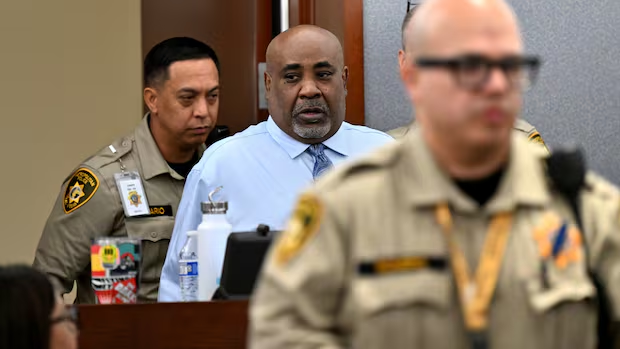
After nearly three decades of unanswered questions and speculation, the case that stunned the music world is finally heading to court. Jury selection began Monday in Las Vegas for the murder trial of Duane "Keffe D" Davis, 63, a former gang member accused of arranging the 1996 shooting death of rap superstar Tupac Shakur.
Davis faces a single count of murder with a deadly weapon with the intent to promote, further or assist a criminal gang. He has pleaded not guilty and remains in custody since his arrest in 2023. The trial is expected to run approximately one month.
Shakur, just 25 years old at the time, was one of hip-hop's brightest talents when he was gunned down on September 7, 1996, on the Las Vegas Strip. His death marked a pivotal and tragic moment in music history, leaving fans and investigators scrambling for answers that would take three decades to materialize.
The "Shot Caller" Strategy
Prosecutors have made clear they won't argue that Davis pulled the trigger. Instead, they'll attempt to prove he was the "shot caller"—slang for a leader or decision maker—who orchestrated the attack on the legendary rapper.
Much of the prosecution's case will hinge on Davis's own words. In his 2019 memoir, Compton Street Legend, the former high-ranking member of the South Side Compton Crips detailed his alleged involvement in the shooting—a decision that ultimately led to his prosecution.
Nevada Judge Carli Kierny oversaw Monday's jury selection, questioning 75 potential jurors about medical issues, language barriers, and conflicts that might prevent them from serving impartially.
A Family's Long Wait for Justice
While the trial represents a potential breakthrough, Shakur's family remains cautious. William Lesane, the rapper's cousin, expressed mixed emotions about the proceedings.
"Justice has been foregone years ago. The night my cousin was murdered—there should have been an intense investigation at that time," Lesane told reporters. "We're here 30 years later, so justice is a little bit weakened."
Despite his skepticism about delayed justice, Lesane acknowledged that the trial could finally bring some measure of accountability for a crime that shocked the entertainment world and left countless questions unanswered.
The Witness Problem
A significant obstacle looms over the prosecution's case: the only other living witness to the shooting refuses to cooperate. Marion "Suge" Knight, the co-founder and then-CEO of Death Row Records, was with Shakur when he was shot. Knight recently told ABC News he will not work with law enforcement and has no intention of testifying.
Knight is currently serving a 28-year prison sentence in California for running over and killing a Compton businessman in January 2015.
A Legacy Remembered
Shakur's impact on hip-hop remains undeniable. Born in New York City but synonymous with West Coast rap, the artist released four solo albums during his lifetime, producing iconic hits including "Dear Mama" and "California Love." Six posthumous albums have followed, cementing his status as one of the genre's most influential figures.
At the time of his death, Shakur was signed to Death Row Records, one of rap's most notorious and powerful labels during the volatile mid-1990s East Coast-West Coast hip-hop rivalry.
This article is based on reporting from CBC News. Read the original story at CBC News World.