


The Artemis II crew is about to experience one of the most intense moments in human spaceflight: a fiery plunge through Earth's atmosphere at speeds that would make the fastest fighter jet look stationary.
After four days of falling back to our planet following their lunar mission, the four-person crew — including Canadian astronaut Jeremy Hansen — will splash down in the Pacific Ocean tonight in what promises to be a nail-biting finale to humanity's triumphant return to deep space exploration.
But what does that descent actually feel like? Canadian astronaut David Saint-Jacques, who spent 204 days aboard the International Space Station before returning to Earth in 2019, offers a firsthand perspective on the ordeal.
The Numbers Are Staggering
The Artemis II Orion capsule will reach a peak speed of 38,405 kilometres per hour — about 10 kilometres per second — just as it hits the upper atmosphere. At that velocity, the spacecraft's heat shield will face temperatures around 2,700 degrees Celsius as friction with the air creates an unmistakable spectacle.
"Right now they're literally falling back to Earth, accelerating the whole way, and they'll hit peak maximum speed as they hit the atmosphere," Saint-Jacques explained. "And then they'll turn into a fireball as the atmosphere slows them down."
Six Minutes of Silence
Perhaps most nerve-wracking for mission control and loved ones watching from Earth: there will be a complete communications blackout for approximately six minutes. During this period, the intense plasma surrounding the spacecraft blocks all radio signals.
"We'll lose comms with them for about six minutes or so," Saint-Jacques said. "Eventually, at about maybe something like six kilometres altitude, they'll open their parachute. We can talk to them again. That's when I think we'll all breathe a sigh of relief."
What Does It Feel Like Inside the Capsule?
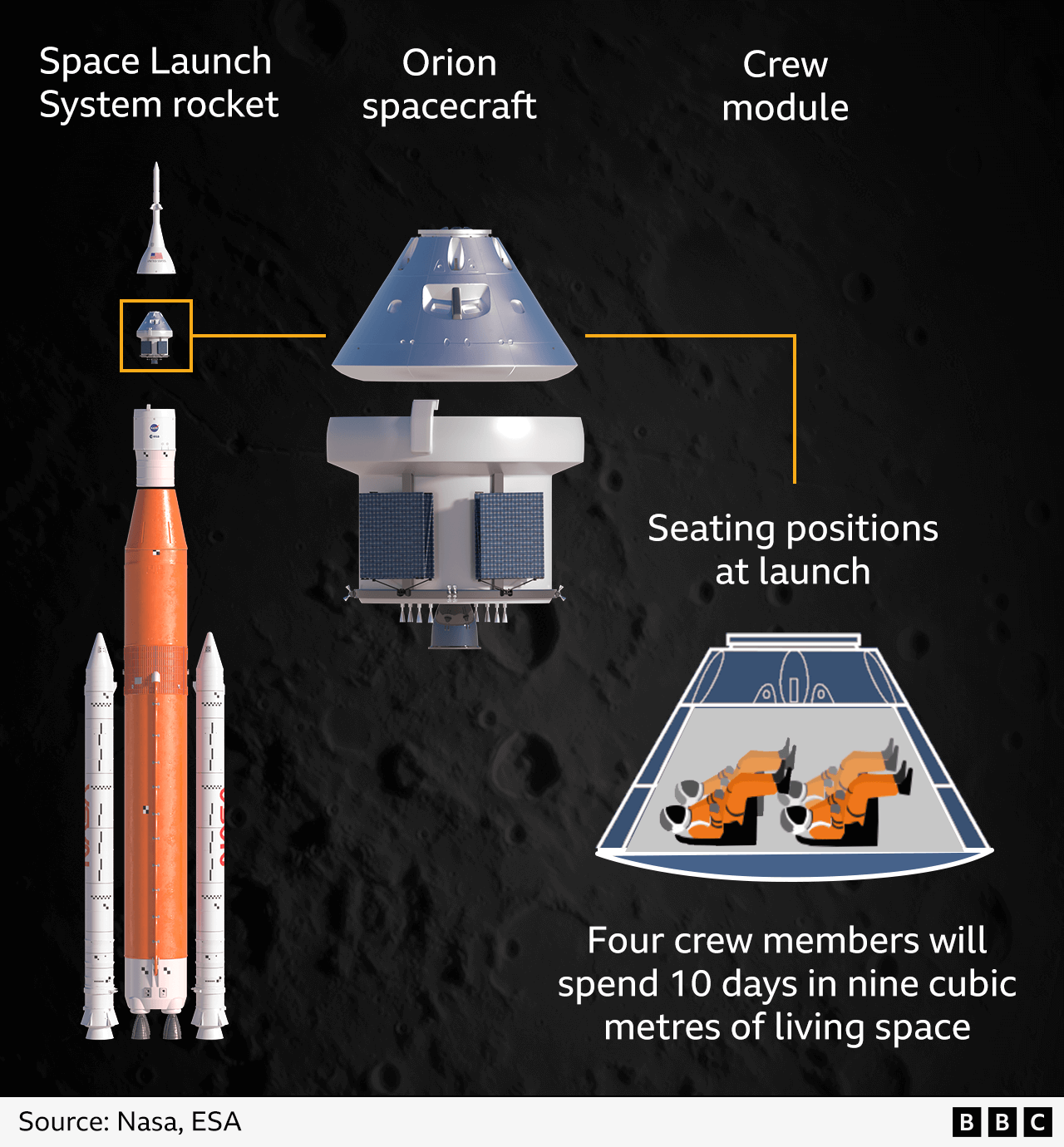
The astronauts aboard — commander Reid Wiseman, pilot Victor Glover, mission specialist Christina Koch, and Canadian mission specialist Jeremy Hansen — have been in a state of free fall for the entire 10-day mission. Saint-Jacques compares the sensation to jumping off a high diving board at a swimming pool.
"While you're coasting in space, you're going fast, you don't really notice it," he explained. "You feel the change of speed. Right now they're in free fall. When you jump off the biggest diving board at a swimming pool, while you're falling, you feel kind of light. That's what they've been feeling like for 10 days."
Saint-Jacques knows the Artemis II crew personally — Hansen's children have even babysat his own kids. Watching friends and colleagues return from the edge of space adds a deeply personal dimension to tonight's milestone moment.
"As a Canadian, I'm super proud that our country has made it this far," Saint-Jacques said, reflecting on Canada's decades of contributions to space exploration. "This is a testament to decades of good work from our engineers, our technicians, our space companies, our space program."
The Artemis II splashdown is expected to occur Friday night in the Pacific Ocean, marking a historic moment in humanity's journey back to the Moon and beyond.
This article is based on reporting from CBC Tech and features analysis from Canadian Space Agency astronaut David Saint-Jacques in an interview with CBC Radio's The Current.