


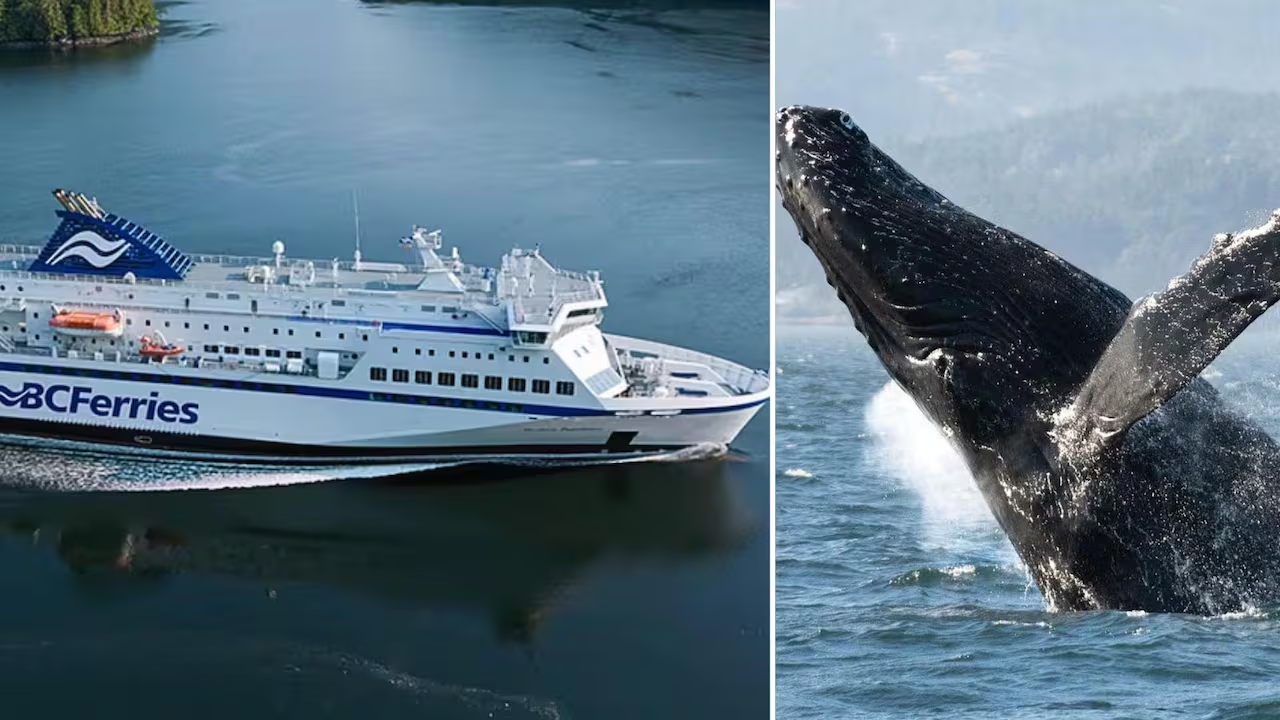
British Columbia's ferry system is making a significant operational shift to protect marine life. Starting June 1, B.C. Ferries will formally adjust schedules for the Northern Expedition—a vital route connecting Prince Rupert, Haida Gwaii, and Vancouver Island—to account for slower travel speeds designed to reduce whale strikes in the region.
The decision comes after a tragic incident last September when a humpback whale named Midnight was struck and killed by the ferry. The Gitga'at First Nation, who identified the whale as a returning visitor to their waters, released a statement mourning the loss as a reminder of the growing collision risks facing marine mammals in B.C. waters.
Why the Change Matters
Humpback whale populations along B.C.'s North Coast have been recovering, but this success has created an unintended consequence: more whales sharing waters with increasing vessel traffic. The collision between ships and whales has become a persistent conservation challenge across the province.
B.C. Ferries has been operating at reduced speeds in areas with high marine mammal presence, particularly in the Wright Sound special operation area. However, the slower speeds have affected on-time performance significantly—arrivals in Prince Rupert have been on schedule only 30 per cent of the time, necessitating official schedule adjustments.
"The most notable change is a longer transfer wait time at McLoughlin Bay for southbound Route 28A connections, increasing by about 50 minutes. Arrivals at Port Hardy and Prince Rupert will occur later than previously scheduled, but these changes do not affect onward connections," B.C. Ferries explained.
What Experts Say
Sean Brillant, a senior conservation biologist with the Canadian Wildlife Federation, acknowledged that while reduced speeds help, they're not a complete solution. "Even when they're going at seemingly slow speeds like 10 knots, it could still be a very dangerous situation for that whale," Brillant said.
He stressed that the most effective approach would be to restrict vessel traffic from areas where whales congregate. Detection technology and designated shipping corridors could further reduce risks, experts argue.
The schedule adjustments represent a balance between ferry service reliability and marine conservation—a challenge transportation authorities across Canada are increasingly facing as wildlife populations recover and shipping corridors expand.
This article is based on reporting from CBC Tech.