


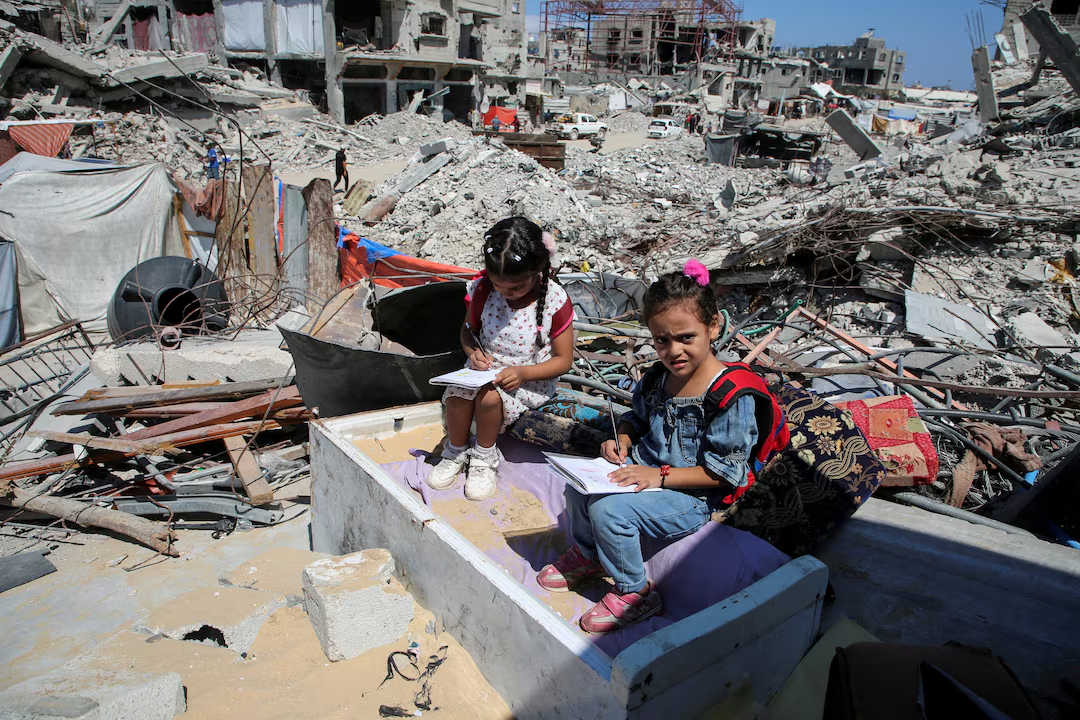
Nearly six months after U.S. President Donald Trump announced a ceasefire between Israel and Hamas, a burst of gunfire shattered the fragile peace in a makeshift schoolroom in northern Gaza. Ritaj Rihan, a nine-year-old third-grader, was shot and killed Thursday while studying in a tent classroom in Beit Lahia, leaving her mother devastated and humanitarian organizations questioning whether the ceasefire is actually working.
Palestinian health and education officials say Israeli forces were responsible for the shooting. The education ministry reported that Ritaj's death caused "a strong psychological shock" to her classmates, who witnessed the tragedy firsthand.
Ritaj's mother, Ola Rihan, spent Friday receiving mourners at her family's tent, clutching her daughter's blood-stained notebook between gasps and sobs. "If I had known that she would go to school and never come back, I wouldn't have let her go," Ola told CBC. "I would have told her that I wanted her to stay."
Tent Schools: A Symbol of Hope Amid Persistent Danger
Across Gaza, tent schools have emerged from the rubble as symbols of cautious optimism—children returning to education after months of devastation. Yet Ritaj's death underscores a brutal reality: there is no safe place in Gaza. Students sit under canvas, exposed to the same violence that surrounds them outside these makeshift classrooms.
"The intensity of the violence has let up slightly," acknowledged one doctor working in the territory, "but airstrikes and gunfire continue to put residents in danger."
Humanitarian Groups Give Ceasefire a Failing Grade
Six months into the agreement, international humanitarian organizations have assessed the ceasefire and delivered a sobering verdict: the "hopeful promise remains largely unfulfilled." While some medical progress has been made—field hospitals now have capacity to perform more complex surgeries and prosthetic fittings for amputee patients—the overall situation paints a darker picture.
Jodie Pritchard, a Red Cross emergency physician from Kingston, Ontario, working at a field hospital in Rafah, described the grim routine: "Most nights we hear gunfire, most mornings we wake up from gunfire." Though fewer mass casualty events mean her team can focus on longer-term care, patients continue arriving with injuries from airstrikes and gunfire whose needs remain "massive."
Israel's Response
When CBC News contacted the Israeli Defence Forces for comment on Ritaj's death, an IDF spokesperson responded via WhatsApp that the military is working to "dismantle Hamas's military capabilities" but declined to provide details about the incident. The response stated: "In stark contrast to Hamas' intentional attacks on Israeli men, women and children, the IDF follows international law and takes feasible precautions to mitigate civilian harm."
The statement offered little comfort to families like the Rihans, who are counting the cost of a ceasefire that, for many Gazans, remains more broken than binding.
This article is based on reporting from CBC News World. Read the full story at CBC News.