


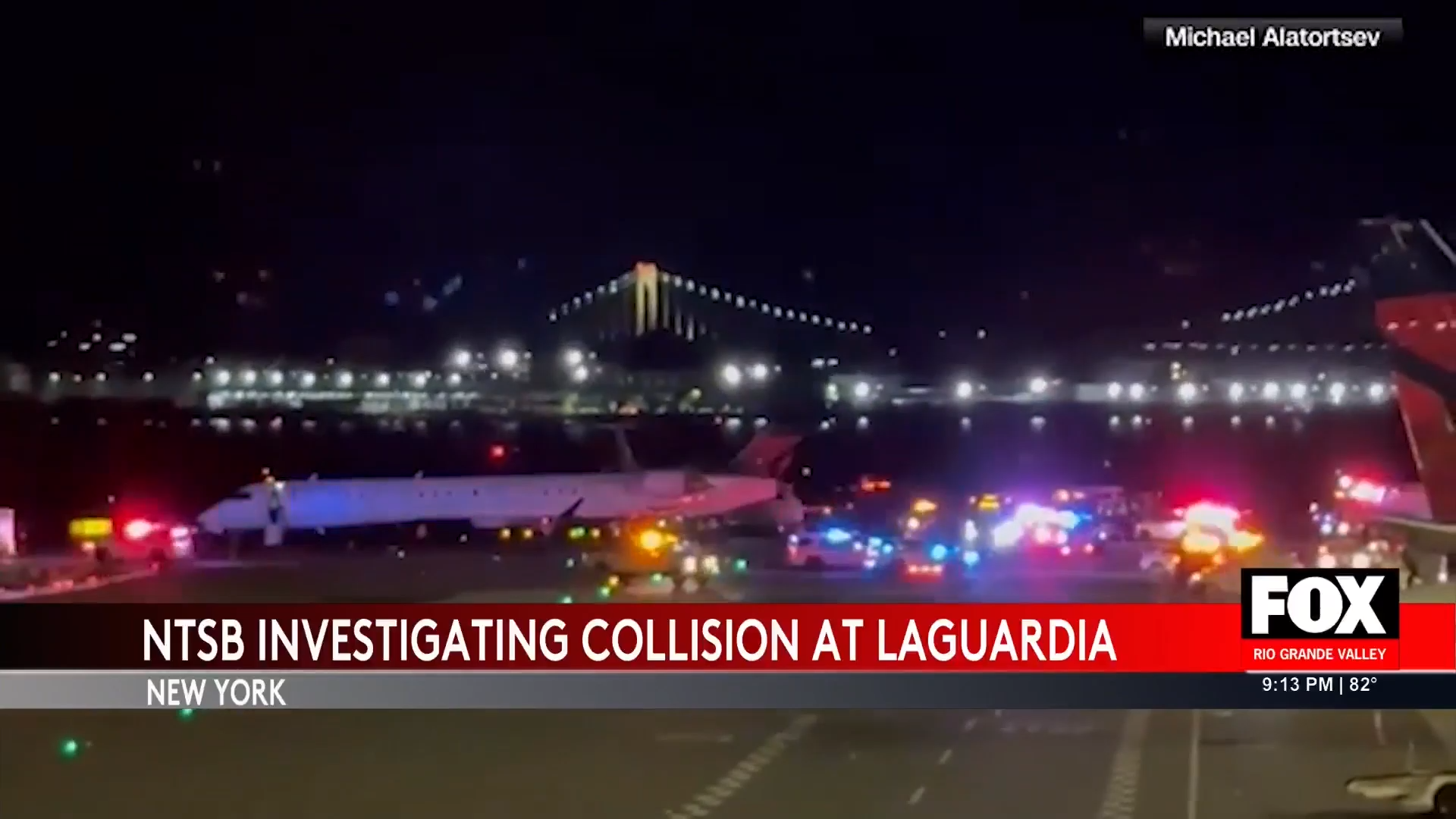
A comprehensive investigation into last month's catastrophic collision between an Air Canada Express flight and a fire truck at New York's LaGuardia Airport has exposed a dangerous gap in airport safety systems — one that could have implications for how North American airports manage ground operations.
The National Transportation Safety Board released its preliminary findings Thursday, revealing that the fire truck's crew heard repeated radio warnings to stop but didn't immediately realize the urgent commands were directed at them. By the time the turret operator understood the message, the truck was already crossing the runway directly into the path of the landing aircraft.
A Deadly Miscommunication
Air Canada Express Flight 8646 received clearance to land on Runway 4 at 11:35 p.m. Two minutes later — just 25 seconds before impact — the fire crew requested permission to cross that same runway to reach a United Airlines jet that had parked on the tarmac.
Air traffic controllers immediately responded, broadcasting "stop" at least 10 times over the radio in increasingly urgent tones. However, according to the NTSB report, the truck's driver heard the initial warnings but didn't comprehend they applied to his vehicle. Only when the turret operator heard "Truck 1, stop, stop, stop" did the crew realize the danger — far too late.
The jet touched down and collided with the fire truck seconds later. Pilots Mackenzie Gunther and Antoine Forest were killed. An additional 33 people sustained injuries, with six suffering serious harm.
The Missing Technology That Could Have Prevented Tragedy
Beyond communication failures, the NTSB investigation identified a critical safety gap: LaGuardia's emergency vehicles were not equipped with transponders compatible with the airport's collision avoidance system.
The Automated Surface Detection Equipment system, known as ASDE-X, is specifically designed to prevent exactly this type of disaster. The technology creates a real-time display that allows air traffic controllers to track every aircraft and ground vehicle simultaneously, triggering visual and audible alerts when a potential collision is detected.
On the night of the crash, none of the seven emergency vehicles in the immediate area carried compatible transponders. While the radar system could detect them as targets, the vehicles were positioned too close together and moving in overlapping patterns. This prevented the ASDE-X system from accurately calculating their positions and predicting a collision course with the landing aircraft.
"The system was unable to correlate the track of the airplane with the track of the fire truck and did not predict a potential conflict with the landing airplane," the NTSB report stated.
Without the automated warning system functioning, controllers were left relying solely on radio communication — a method that, as this tragedy demonstrates, can fail when crews are operating under stress and managing multiple tasks simultaneously.
Questions About Airport Safety Standards
The findings raise critical questions about whether major North American airports have adequate safeguards in place to prevent ground vehicles from entering active runways. If LaGuardia — one of the busiest airports in the United States — was operating emergency vehicles without transponder technology, similar gaps may exist at other major aviation hubs.
The investigation underscores a harsh reality: even with experienced pilots, alert ground crews, and active air traffic control, the absence of redundant safety systems can transform routine operations into catastrophe in seconds.
The NTSB's preliminary report is expected to inform recommendations for improved safety protocols across North American airports, though implementation of such changes often takes months or years.
This article is based on reporting from CBC World.