


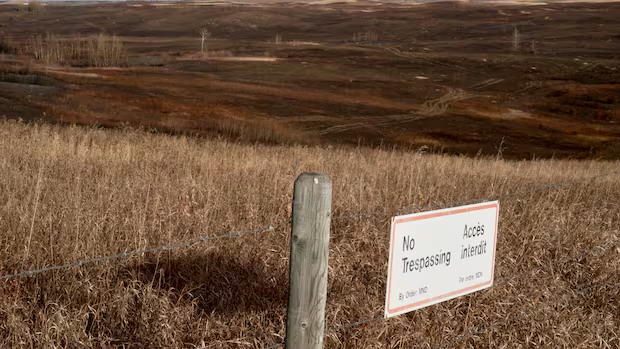
More than a month after a catastrophic grassfire swept through Canadian Forces Base Wainwright, Alberta health officials are sharing sobering details about the scale of the disaster and the extraordinary efforts required to save the lives of severely burned soldiers.
During a news conference Thursday, provincial health leaders painted a picture of a medical system pushed to its absolute limits. Five soldiers have been confirmed dead — four at the scene and one who succumbed to his injuries in an Ontario hospital on Nov. 13. Nineteen soldiers remain hospitalized across Alberta, with seven listed in critical condition.
The Oct. 17 tragedy unfolded with terrifying speed. Military officials say a low-burning grass fire suddenly flared in a fierce windstorm during a training exercise approximately 200 kilometres southeast of Edmonton, rapidly advancing on soldiers in its path. What followed was a cascade of emergency responses that tested every aspect of Alberta's health-care infrastructure.
The Burn Unit at Breaking Point
Dr. Josh Wong, interim medical director of the Firefighters' Burn Treatment Unit at the University of Alberta Hospital, described the immediate aftermath as overwhelming. Within hours, 20 of the most severely wounded soldiers arrived at his specialized ward — pushing capacity to more than five times normal levels.
"It's not often that we see an event like this, or at least at this magnitude, on our burn unit," Wong said Thursday. "The number of patients requiring highly specialized care — complex care — placed extraordinary demands on our teams."
Facing an impossible situation, hospital staff made critical decisions. Patients were diverted across multiple departments, including intensive care units, to make room for those with the most life-threatening injuries. A code orange was declared across Edmonton hospitals — a formal declaration that the system was nearing complete overwhelm.
As Wainwright's emergency room became saturated, patients were airlifted to hospitals throughout the province, triggering a coordinated provincial response of rare scope.
Years of Recovery Ahead
Wong, who also serves as a burn, plastic and reconstructive surgeon, warned that recovery from severe burns is a marathon, not a sprint. Many of the injured soldiers face months — even years — of specialized treatment, rehabilitation, and ongoing medical care.
Alberta health officials expressed profound gratitude to frontline workers who answered the emergency. The disaster has exposed both the resilience of the province's medical system and the urgent need to prepare for mass casualty events that push institutional capacity beyond normal limits.
As the province continues to support the recovering soldiers and their families, officials say the lasting impact of Oct. 17 will shape conversations about emergency preparedness and specialized trauma care for years to come.
This report is based on information from CBC News coverage of the CFB Wainwright fire tragedy. For the full story, visit CBC News.