


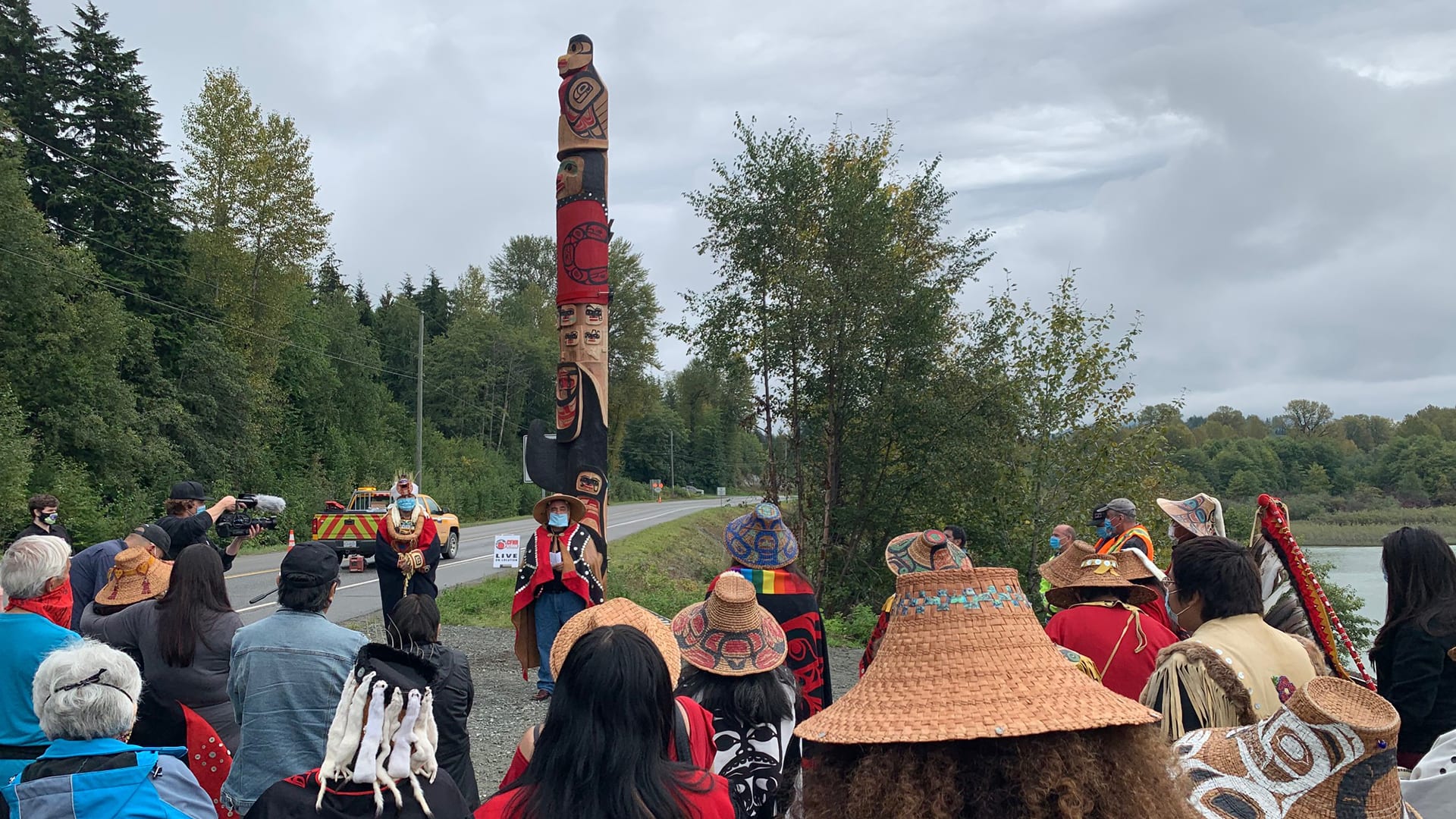
Family members of Indigenous women and girls lost to violence along British Columbia's Highway of Tears gathered Friday morning in Prince George as a striking new monument was unveiled to honour their loved ones and mark two decades of advocacy.
The Pillar of Hope, unveiled at Cottonwood Island Park, stands as a permanent tribute to the dozens of Indigenous women and girls who have gone missing or been murdered along the 720-kilometre stretch of Highway 16 between Prince George and Prince Rupert since the 1960s. The monument's unveiling marked the final day of the 20th anniversary Highway of Tears Symposium, a four-day gathering that reunited families, elders, government officials, and Indigenous leaders to reflect on progress and ongoing challenges.
During the emotional ceremony, families and supporters formed a circle around the cedar pillar, reading aloud the names of those they had lost as drum beats echoed through the park. For many present, the moment brought both tears and a sense of recognition that their grief was finally being witnessed on a larger scale.
"It means so much for the families," said Brenda Wilson-John, whose 16-year-old sister Ramona was murdered in Smithers in 1994. "You can see the connection to this pillar and how emotional it was for them to be there, and stand there, and touch it, and all together they were holding hands and supporting each other."
A Monument of Healing and Remembrance
The Pillar of Hope was carved by Nak'azdli artist Clayton Gauthier, who designed four rounded cedar panels, each representing a different season. The intricate carvings weave together Indigenous artistic traditions and cultural symbols from multiple nations across British Columbia—a deliberate choice to honour the diverse communities affected by violence along the highway.
"There's a lot of nations on the Highway of Tears who have members that have passed and gone missing and been murdered, so I did my best to incorporate different designs and different understandings of different cultures throughout B.C.," Gauthier explained. For the artist, seeing the monument unveiled before grieving families was a deeply meaningful experience.
Mary Teegee, executive director of Carrier Sekani Family Services, which led the monument project, described the unveiling as bittersweet—a moment of recognition for families who have long fought for justice and visibility.
"This place, we're hoping, will be balm for the soul and give peace to our families that are grieving and give peace to their hearts for even just a moment," Teegee said. "We are not just disposable. There is also a recognition that this issue is still ongoing and we still have to be vigilant and safe and society needs to know that."
20 Years of Advocacy and Ongoing Work
The symposium marked the anniversary of a pivotal 2006 gathering that first brought national attention to the systemic violence targeting Indigenous women and girls along Highway 16. That original conference produced 33 safety recommendations—many of which remain unimplemented or only partially addressed two decades later.
The four-day symposium brought stakeholders together to evaluate progress on those recommendations and to chart a path forward for communities still grappling with the dangers that claim Indigenous lives along the corridor. The Pillar of Hope now serves as both a memorial for families and an awareness marker for the broader community—a permanent reminder that the Highway of Tears remains a critical issue demanding action and vigilance.
This article is based on reporting from CBC British Columbia. For the full story, visit CBC News.