


Cuba appears to be approaching a critical political crossroads as 67 years of communist one-party rule faces mounting pressure from an unprecedented economic crisis, leaving many to wonder what comes next for the Caribbean nation.
The current situation has reached a breaking point that most observers agree cannot continue indefinitely. Rising food prices and fuel shortages have devastated daily life across the island, with gasoline selling for up to $10 per litre on black markets and some regions receiving only intermittent electricity for a few hours each day.
However, uncertainty looms over how any potential transition might unfold. Political analysts warn that change could come from within through popular uprising or be imposed externally, potentially by the United States. There are also concerns that any shift might merely result in cosmetic changes similar to what occurred in Venezuela, rather than genuine democratic reform.
Economic Reforms Fall Short
Speaking before a Canadian parliamentary committee last month, Cuba's Ambassador to Canada Rodrigo Malmierca Diaz defended his government's economic record, highlighting recent reforms aimed at expanding private sector opportunities.
"In the last 20 years we have introduced a lot of reforms in the economic field, many of them to give more possibilities to the private sector to operate in Cuba," Malmierca Diaz told MPs. "We have in maybe in the last 10 years created thousands of new enterprises. We are not closing doors to the development of the private sector in Cuba."
The ambassador maintained that Cuba's economic difficulties stem primarily from the long-standing U.S. embargo, a position that has drawn sharp criticism from opposition voices.
Opposition Challenges Government Claims
John Suarez, director of the Center for a Free Cuba, appeared before the same parliamentary committee two days later and disputed the government's narrative. He argued that South Africa faced a more comprehensive embargo during apartheid but never experienced the food security issues plaguing Cuba.
Suarez pointed to systemic problems within Cuba's centralized agricultural system, explaining how farmers are forced to sell crops to the state at fixed prices in exchange for supplies, often resulting in rotting produce and shortages of essential inputs like fertilizer and pesticides.
"These inefficiencies, which are unrelated to sanctions, stem from the absence of market mechanisms," he told Canadian legislators.
Poverty and Food Insecurity Widespread
Cuban Canadian Kirenia Carbonell painted a stark picture of life on the island during her testimony before MPs, describing decades of food shortages and extreme poverty affecting the vast majority of the population.
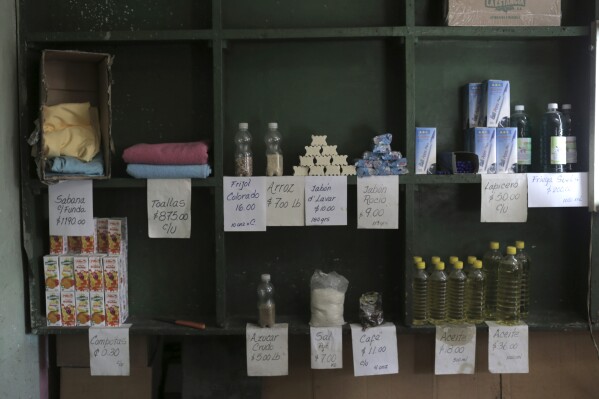
"We have been suffering from hunger for decades. It's estimated that 89 per cent of the population lives in extreme poverty," Carbonell said. "We have bodegas, what we call in Canada convenience stores. Each town might have one. Those shelves have been empty since I can remember."
The testimonies highlight concerns about what might happen if Cuba undergoes rapid political change. Many worry that impoverished residents who own virtually nothing under the current system could become an underclass in their own country if wealthy diaspora communities and foreign investors purchase properties and businesses at bargain prices during any transition.
Unlike Venezuela, where opposition groups maintained some presence and the ruling party never fully embraced Marxist economic policies, Cuba has systematically suppressed private enterprise for decades. This fundamental difference suggests any political transition could prove more traumatic and complex than other regional precedents.
As economic conditions continue to deteriorate and international attention focuses on the island's future, Cubans both on the island and in diaspora communities worldwide are grappling with unprecedented questions about what comes after nearly seven decades of communist rule.
This article is based on reporting by CBC World. Read the original story here.